Cardinal Niccolò Albergati (?)
around 1435 | Jan van Eyck
During a peace congress in Arras in 1435, van Eyck produced a silverpoint drawing (Dresden) in which he not only caught the physiognomy of the elderly cardinal and papal envoy, but already noted details concerning paint colours. The portrait shown here was produced soon after. Contrary to art history myth, oil painting, i.e. the use of oil resins as a bonding agent, was not invented by van Eyck. Yet he did transfer the delicate art of painting, which had already reached its highest point in book painting, to the larger format of panel painting, using new, highly refined techniques
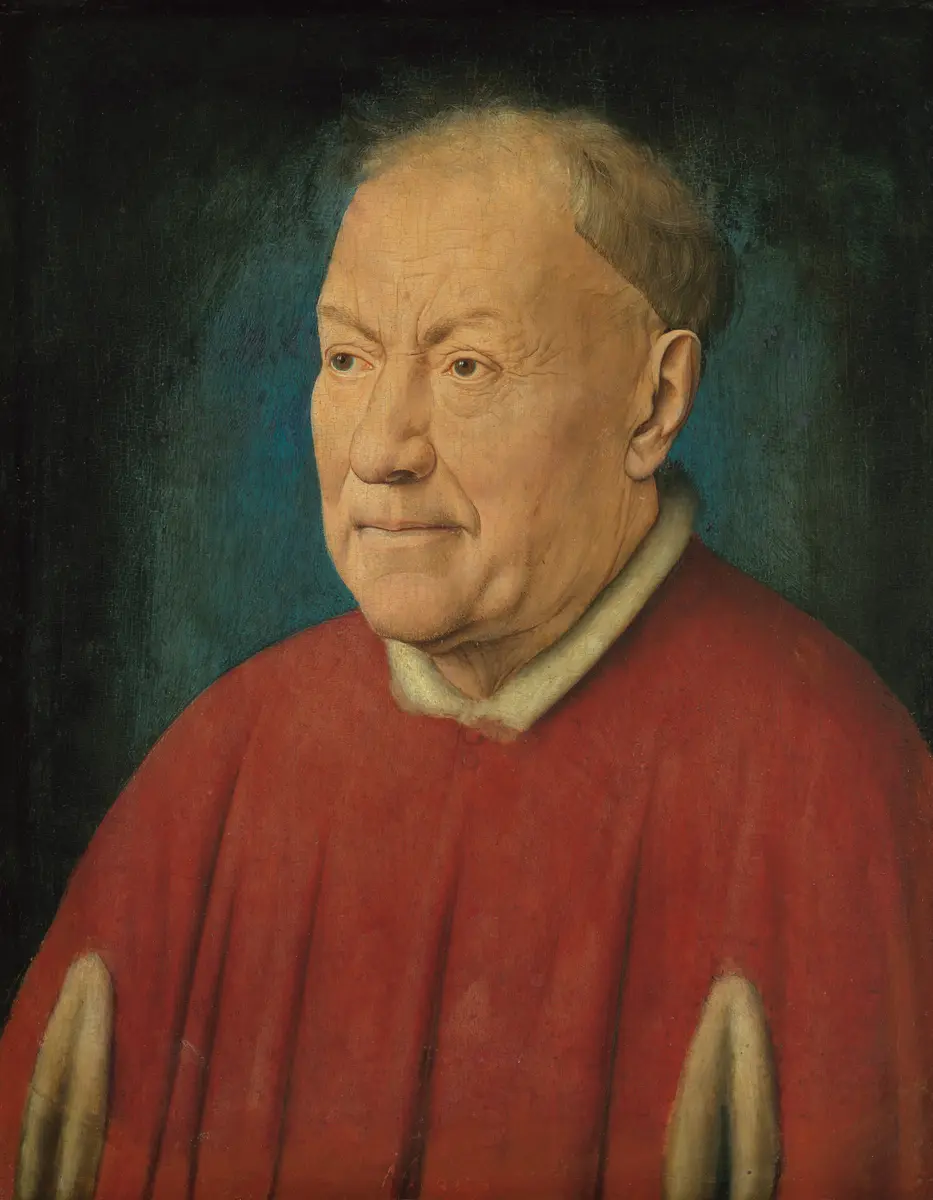
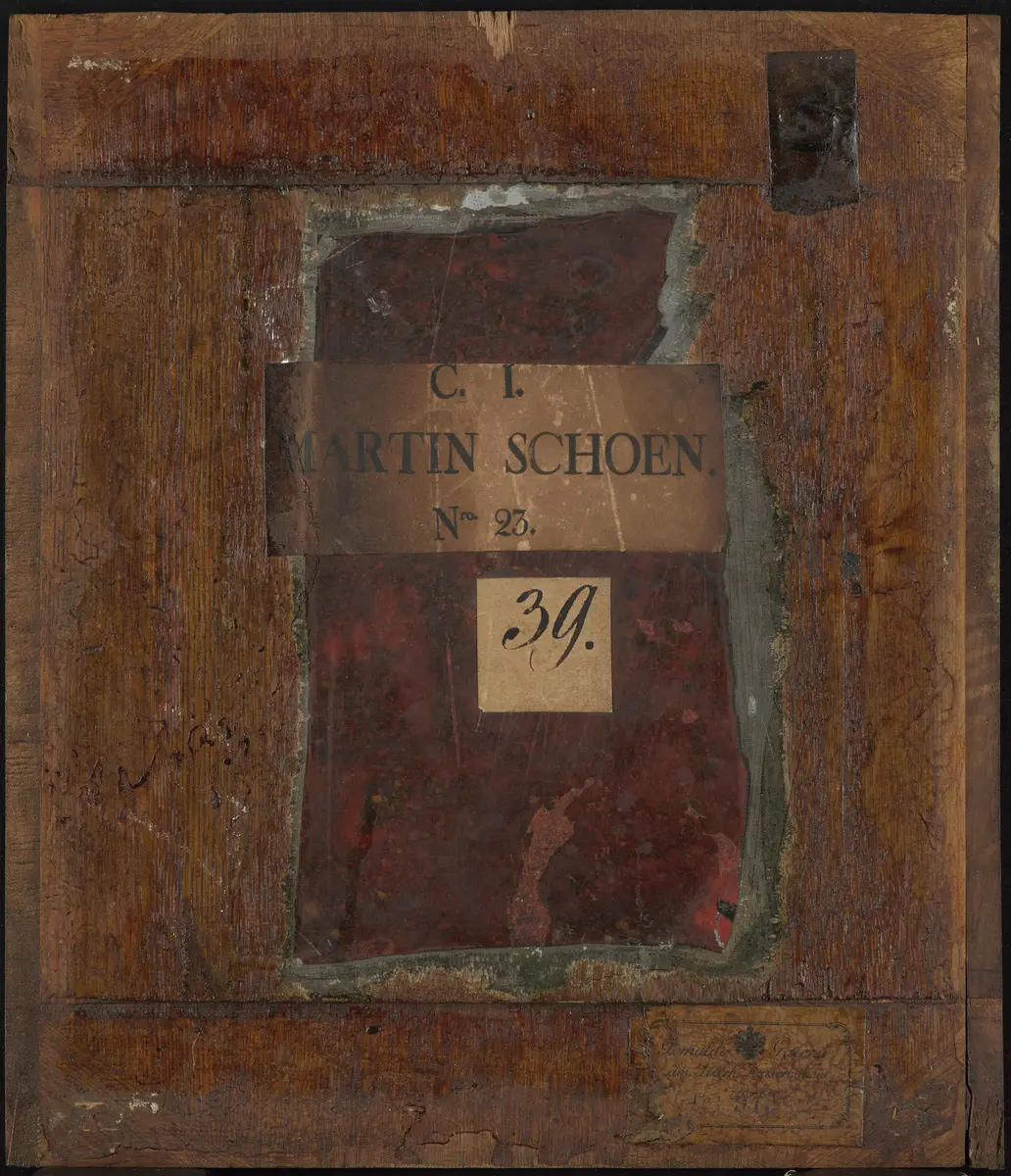
During a peace congress in Arras in 1435, van Eyck produced a silverpoint drawing (Dresden) in which he not only caught the physiognomy of the elderly cardinal and papal envoy, but already noted details concerning paint colours. The portrait shown here was produced soon after. Contrary to art history myth, oil painting, i.e. the use of oil resins as a bonding agent, was not invented by van Eyck. Yet he did transfer the delicate art of painting, which had already reached its highest point in book painting, to the larger format of panel painting, using new, highly refined techniques
Artist:
Jan van Eyck (um 1390 Maaseyck bei Maastricht - 1441 Brügge) DNB
Depiction/Person:
Kardinal Niccolò Albergati (1375 - 1443) DNB
Time:
around 1435
Object Name
Painting
Culture
Early Netherlandish
Material/technology:
oak wood
Dimensions:
links 1 cm/rechts 1,1 cm angestückt; i.18. Jh. oval, sp. ergänzt: Overall: 34 cm × 29,5 cm
Framed: 42,5 cm × 35,5 cm × 3,5 cm
Copyright
Kunsthistorisches Museum, Gemäldegalerie
Invs.
Gemäldegalerie, 975
Provenance
until 1648 Coll. of the Antwerp art dealer Peeter Stevens; acquired by Archduke Leopold Wilhelm in 1648