Artemis (Typus Candia)
1. Jh. n. Chr., nach griechischem Original um 460 v. Chr.
This head belongs to the statue of an unidentified goddess; unfortunately none of the extant copies of this type – known as “Candia” after one of the oldest examples, which was discovered on Crete – have retained an attribute that would allow archaeologists to identify her. Only a relief now in Berlin suggest that it might be Artemis. The large number of extant ancient copies suggests that these statues are based on a well-known Greek model from the Classical period.
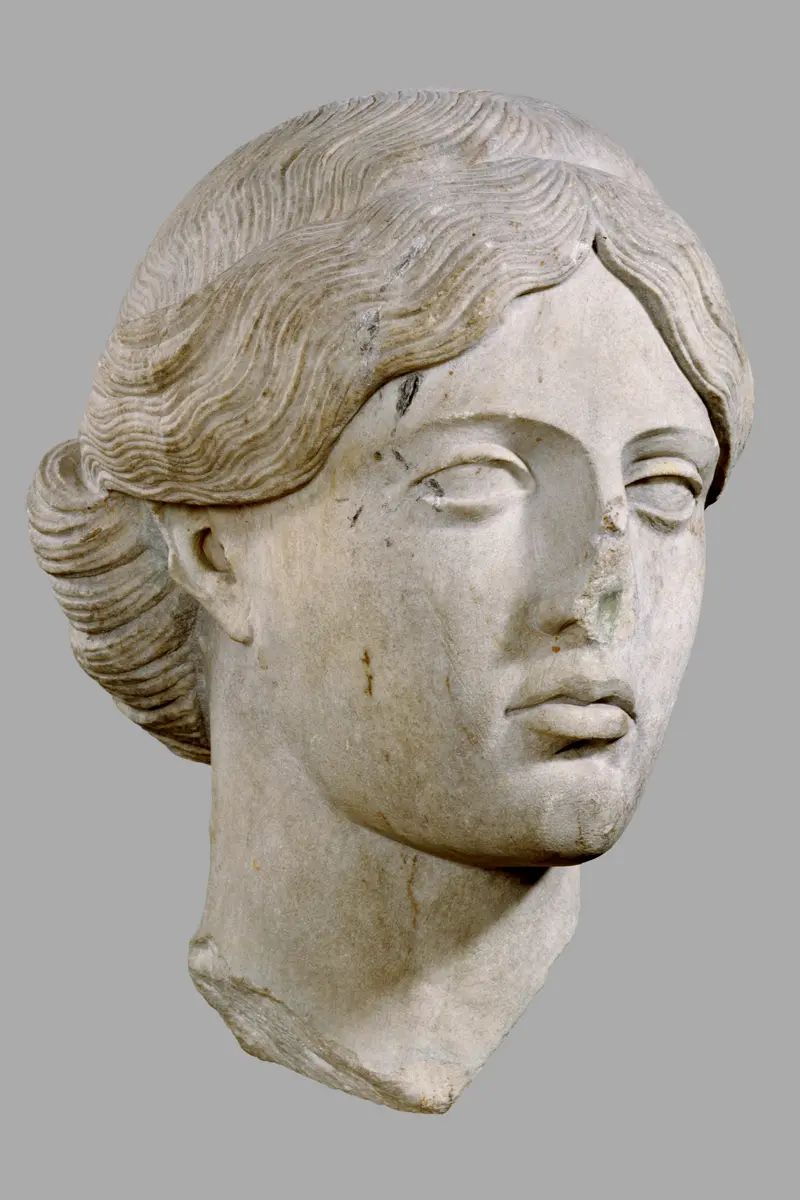
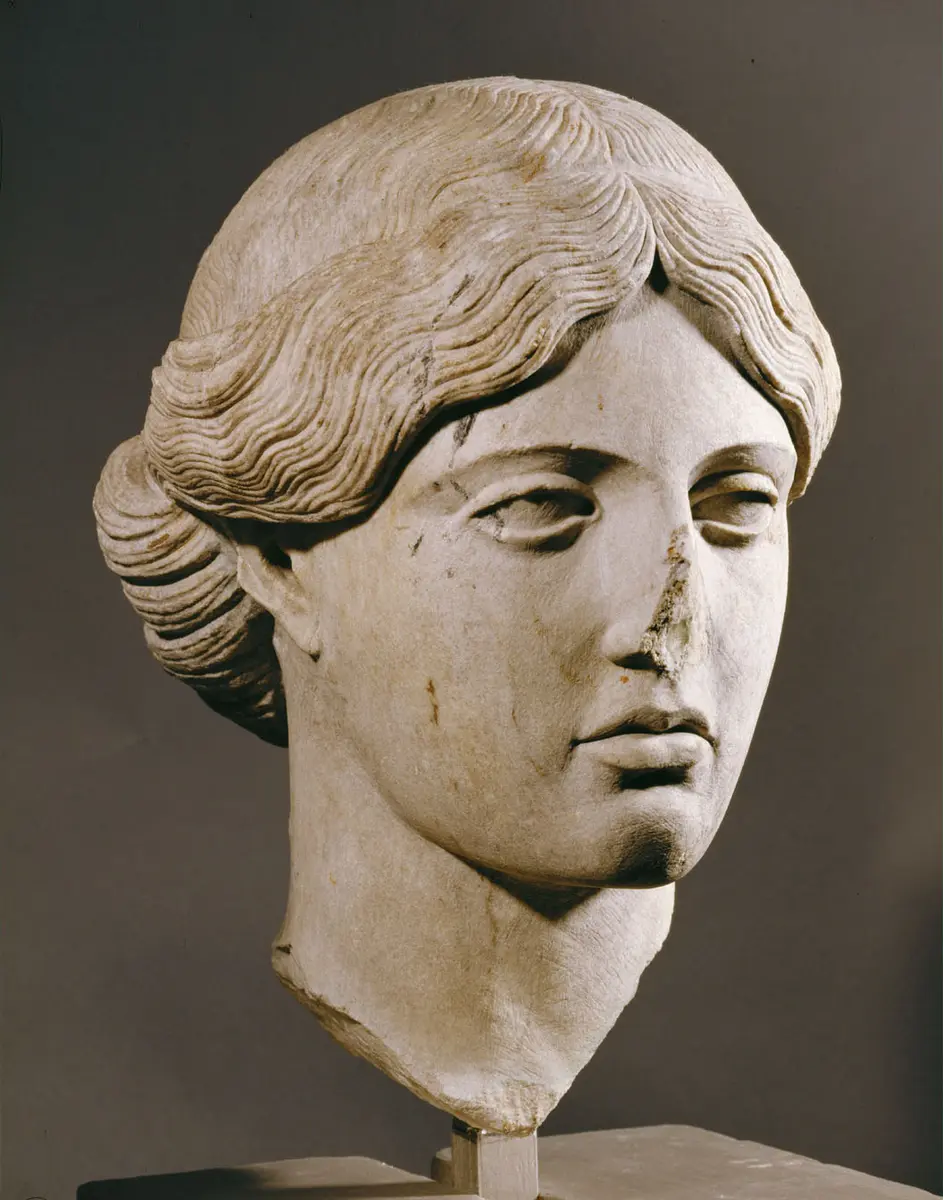
This head belongs to the statue of an unidentified goddess; unfortunately none of the extant copies of this type – known as “Candia” after one of the oldest examples, which was discovered on Crete – have retained an attribute that would allow archaeologists to identify her. Only a relief now in Berlin suggest that it might be Artemis. The large number of extant ancient copies suggests that these statues are based on a well-known Greek model from the Classical period.
Time:
1. Jh. n. Chr., nach griechischem Original um 460 v. Chr.
Object Name
Kopf
Culture
Römisch
Location of discovery:
Ephesos Hafengymnasium Marmorsaal (Selçuk, Kleinasien, Türkei)
Material/technology:
Marmor
Dimensions:
H. 31 cm
Copyright
Kunsthistorisches Museum, Antikensammlung
Invs.
Antikensammlung, I 829
Provenance
Sultan, Abdul, Hamid, II.; Österreichische Ausgrabungen in Ephesos; Geschenk an Kaiser Franz Joseph; 1911 nachträglich inventarisiert