Armbrust
zwischen 1499 und 1514 | Ludwig XII. (1498-1515), Herzog von Orléans, König von Frankreich, 1499, 1500-1512 Herzog von Mailan
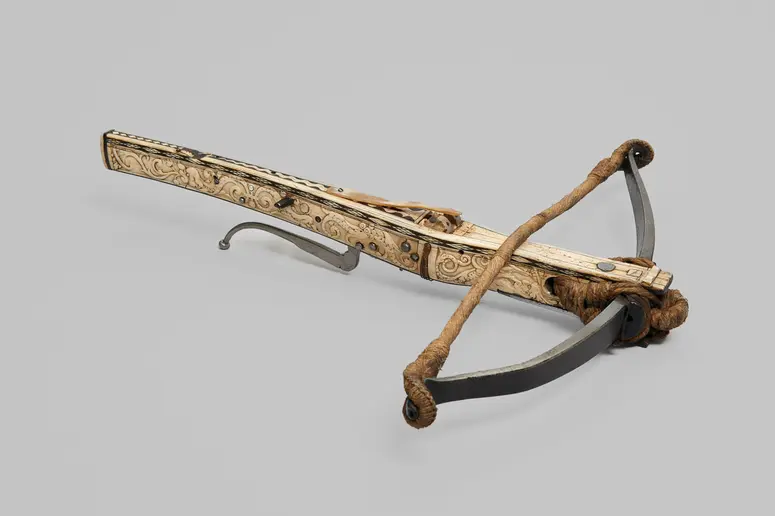
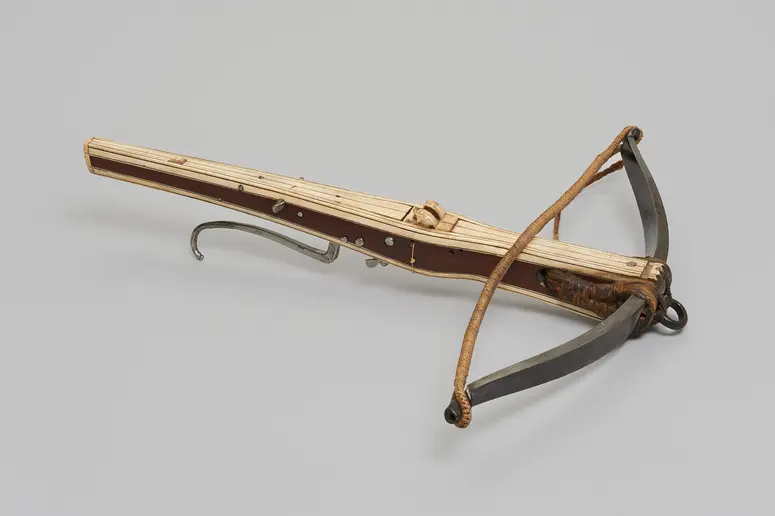
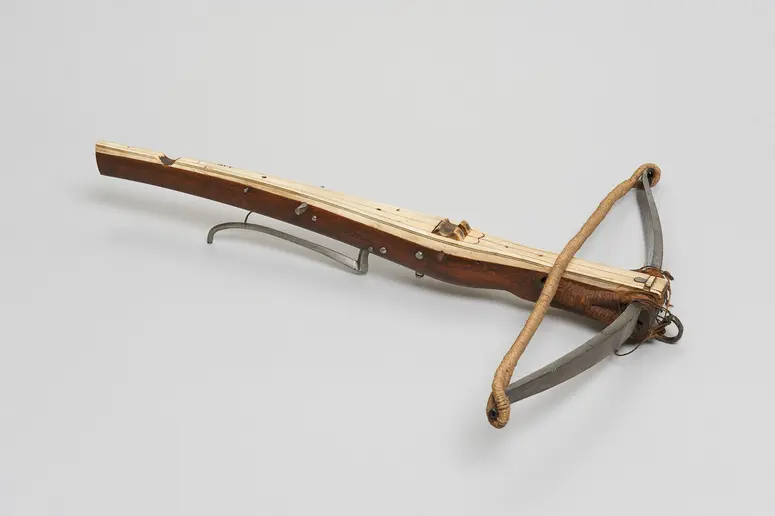
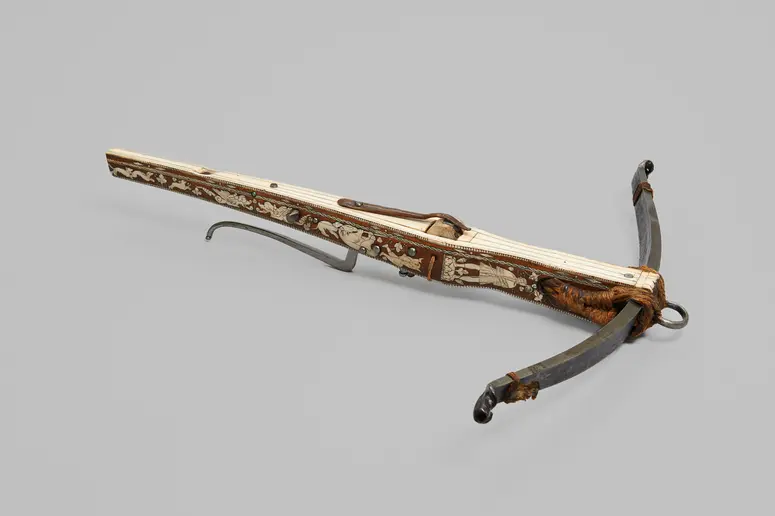
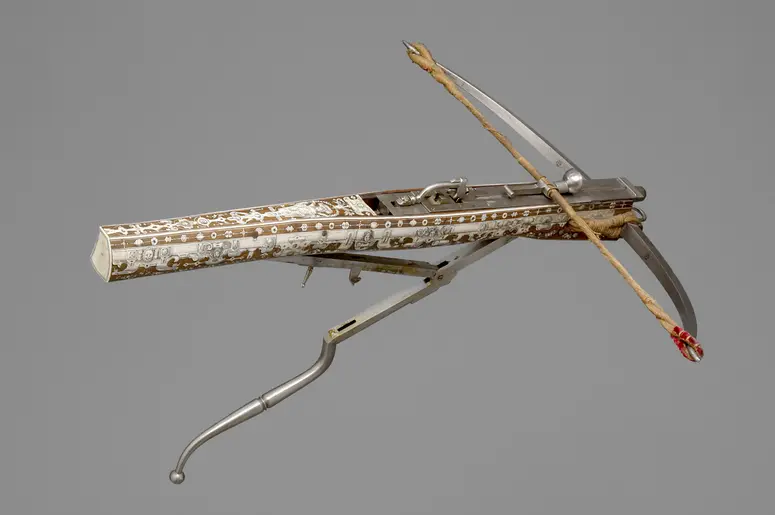
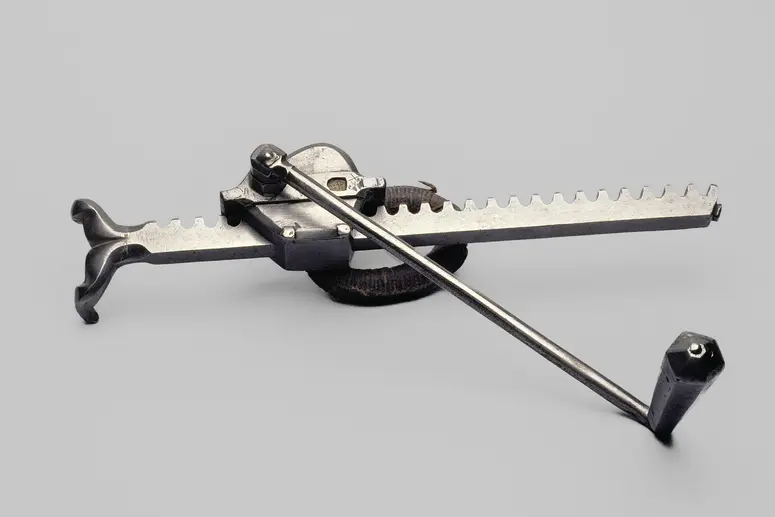
This crossbow is emblazoned with the French royal arms, the arms of Anne de Bretagne, and the symbol of the Order of the Porcupine (a depiction of the eponymous animal). This particular combination allows us to attribute this splendid weapon to King Louis XII of France, and to date it to between 1499 and 1514. Anne, Duchess of Brittany, wed Louis XII in January 1499 and died at the age of 37 in January 1514.
Prior to her marriage to Louis, Anne was married to his predecessor, King Charles VIII, who had died young; her first husband (though this union was quickly annulled) had been the young Maximilian I. The French royal arms on this crossbow cannot refer to Charles VIII because the Order of the Porcupine is a clear reference to Louis. This order of chivalry had been founded by Louis’s grandfather Louis of Valois, Duke of Orleans, in 1394. When Louis XII succeeded to the throne in 1498, he revived the order and chose the porcupine as his personal emblem.
The crossbow’s shape and stylistic details such as the etched decoration on the steel bow identify it as the work of a Spanish master. Spanish crossbows were renowned throughout Europe for their elegance and high-quality workmanship. Philip the Handsome probably commissioned the crossbow as a diplomatic gift for Louis XII, but we may assume that recurring political tensions with France prevented it from being sent to Paris, which is why it has remained in the Habsburg collection.
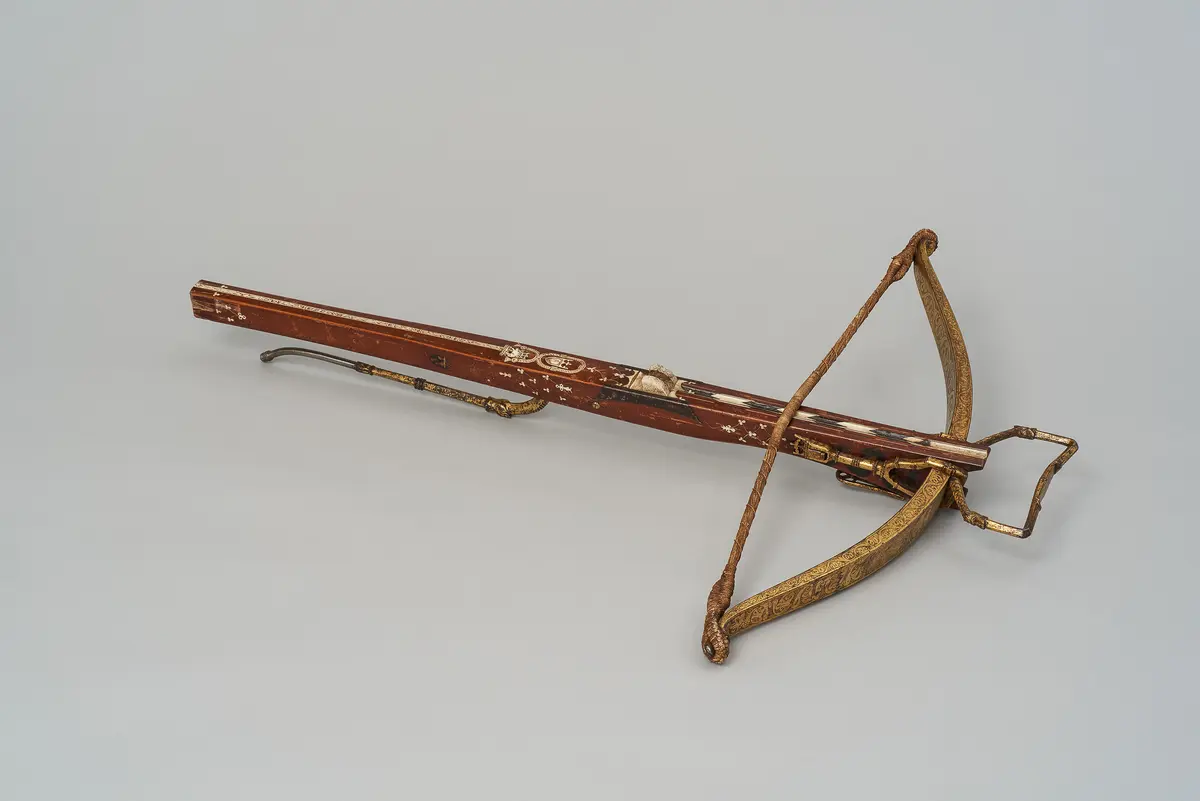
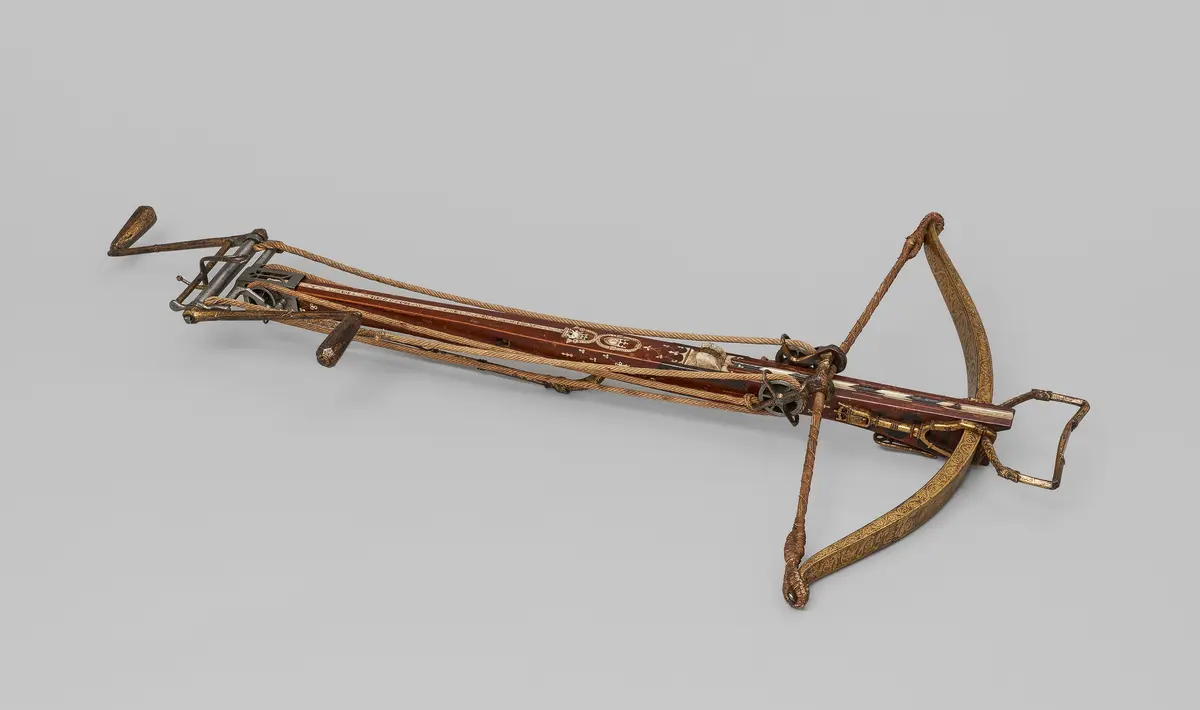
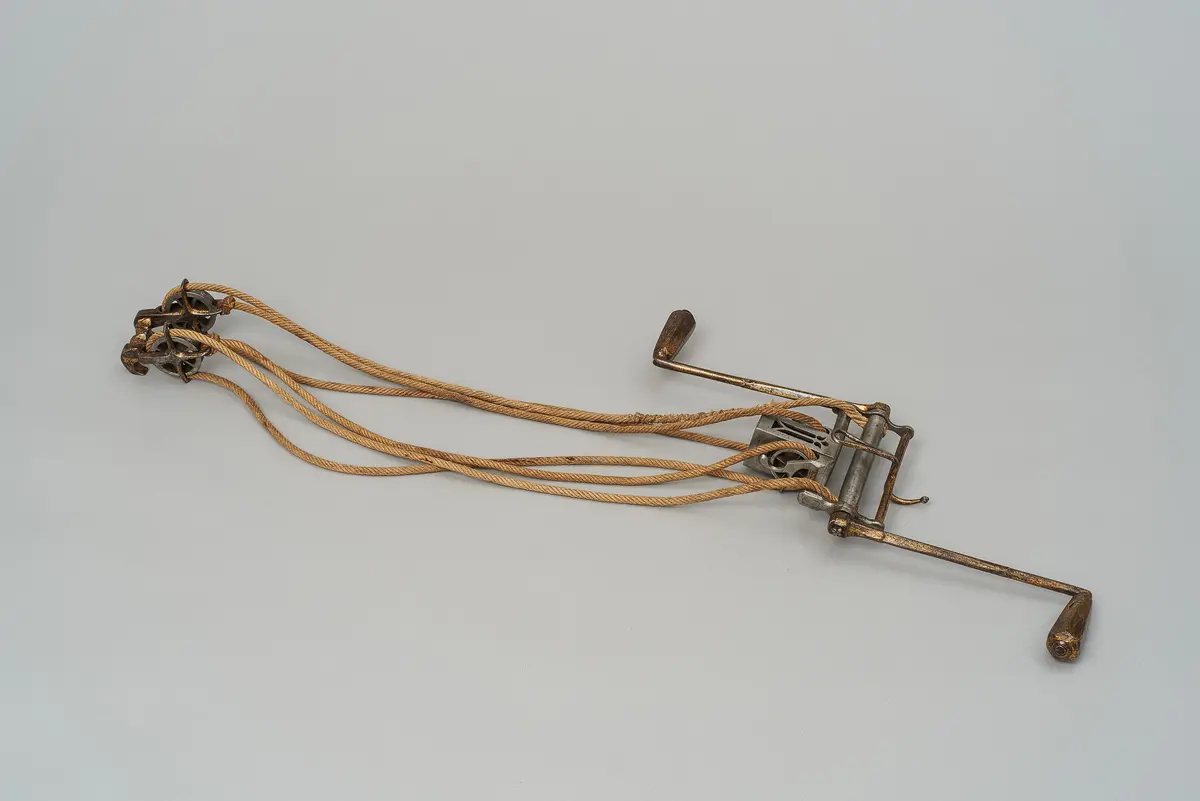
This crossbow is emblazoned with the French royal arms, the arms of Anne de Bretagne, and the symbol of the Order of the Porcupine (a depiction of the eponymous animal). This particular combination allows us to attribute this splendid weapon to King Louis XII of France, and to date it to between 1499 and 1514. Anne, Duchess of Brittany, wed Louis XII in January 1499 and died at the age of 37 in January 1514.
Prior to her marriage to Louis, Anne was married to his predecessor, King Charles VIII, who had died young; her first husband (though this union was quickly annulled) had been the young Maximilian I. The French royal arms on this crossbow cannot refer to Charles VIII because the Order of the Porcupine is a clear reference to Louis. This order of chivalry had been founded by Louis’s grandfather Louis of Valois, Duke of Orleans, in 1394. When Louis XII succeeded to the throne in 1498, he revived the order and chose the porcupine as his personal emblem.
The crossbow’s shape and stylistic details such as the etched decoration on the steel bow identify it as the work of a Spanish master. Spanish crossbows were renowned throughout Europe for their elegance and high-quality workmanship. Philip the Handsome probably commissioned the crossbow as a diplomatic gift for Louis XII, but we may assume that recurring political tensions with France prevented it from being sent to Paris, which is why it has remained in the Habsburg collection.
Time:
zwischen 1499 und 1514
Object Name
Armbrust
Culture
Spanisch
Material/technology:
Bogen, Steigbügel: Eisen, geschmiedet, teils geschnitten, teils geätzt, teils feuervergoldet, teils farbig gefasst. Säule: Holz, farbig gefasst, teils bemalt. Bein- oder Geweiheinlagen, teils graviert, teils durchbrochen gearbeitet. Ebenholzeinlagen. Nuss: Geweih. Sehne: Hanf (?).
Dimensions:
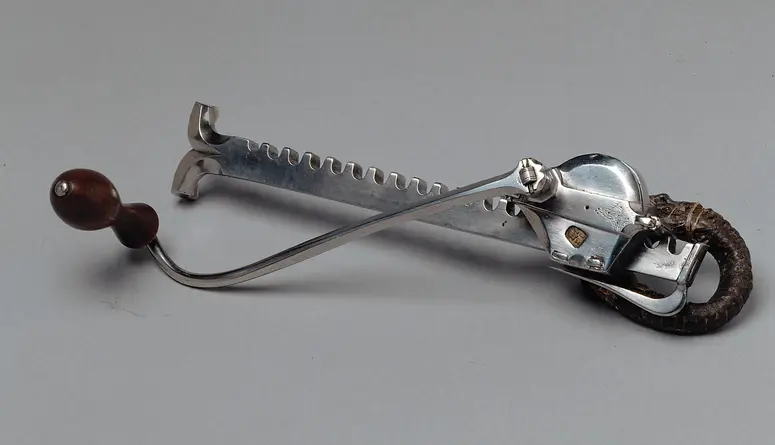
L 83,5 cm x B 60 cm x T 18 cm x GesL mit Winde 108 cm
Gewicht: 3,55 kg
Stamp / markings
Am Stahlbogen ein undeutlicher Stempel
Copyright
Kunsthistorisches Museum, Hofjagd- und Rüstkammer
Invs.
Hofjagd- und Rüstkammer, D 1
Browse more
Similar items you might be interested in

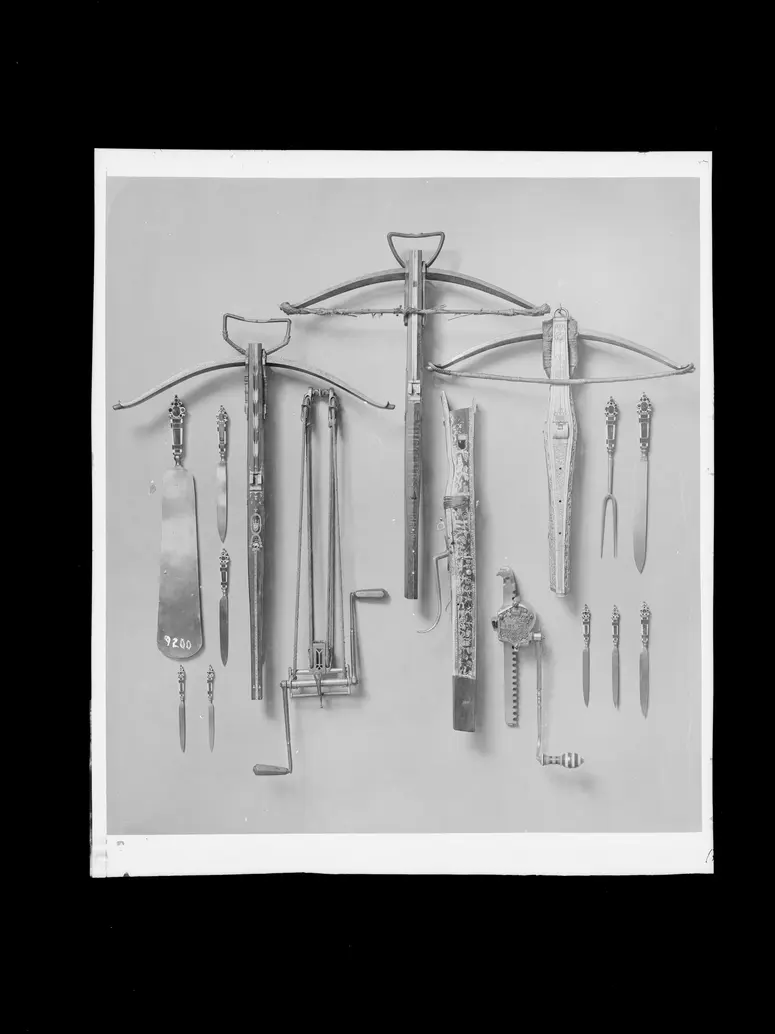
Jagdbesteck (bestehend aus einem Waidblatt, einer Gabel und acht Aufbruch- und Zerwirkmessern) mit Lederetui; Armbrust; Flaschenzugwinde; Jagdarmbrust; Säule einer Armbrust; Armbrust; Deutsche Winde J. Löwy, K. und K. Hof-Photograph, Kunst- und Verlagsanstalt (Wien) 1892
Ferdinand II. (1564-1595), Erzherzog von Österreich und Landesherr von Tirol um 1580 (vor 1596)
Ludwig XII. (1498-1515), Herzog von Orléans, König von Frankreich, 1499, 1500-1512 Herzog von Mailan 1508–1512
Ludwig XII. (1498-1515), Herzog von Orléans, König von Frankreich, 1499, 1500-1512 Herzog von Mailan 1508

Ludwig XII. (1498-1515), Herzog von Orléans, König von Frankreich, 1499, 1500-1512 Herzog von Mailan zwischen 1499 und 1514
Painting: Portrait Ludwig van Beethoven Ferdinand Georg Waldmüller 1823
Becher mit Ruinenlandschaft Johann Ludwig Faber Letztes Drittel 17. Jahrhundert