Apollo (Dioskur?)
2. Jh. n. Chr., nach griech. Vorbild der 2. Hälfte 4. Jh. v. Chr.
Die linke Schulter und der Oberarm des Gottes sind von einem Mantel bedeckt. Im Haar - die mähnenartige Frisur mit dem aufstrebenden Mittelbüschel erinnert an die Haartracht Alexanders des Großen - ein Blattkranz, beide Hände umfassten stabförmige - jetzt fehlende - Attribute. Möglicherweise stellt die Statuette nicht Apollo, sondern einen der Dioskuren dar: Der Rest eines Silberstiftes im Scheitel könnte von einem Stern stammen; die Attribute in den Händen wären in diesem Fall Lanze und Schwert.
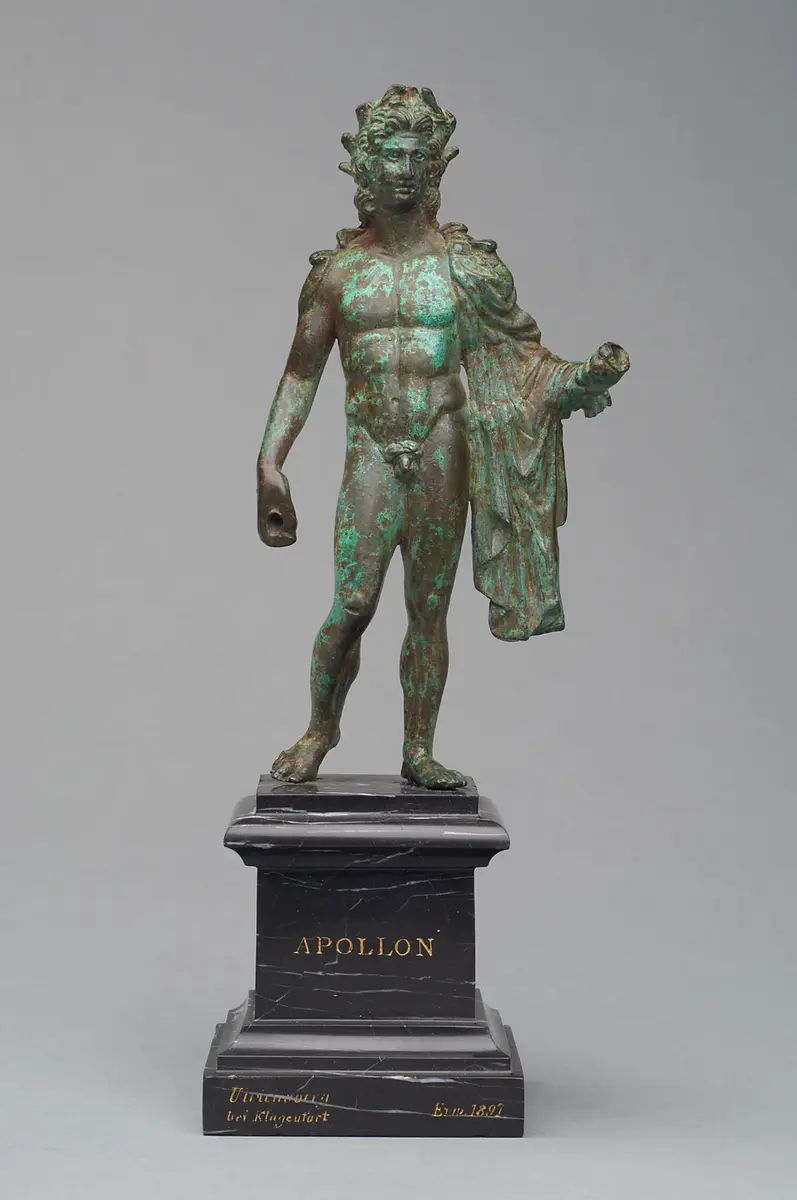
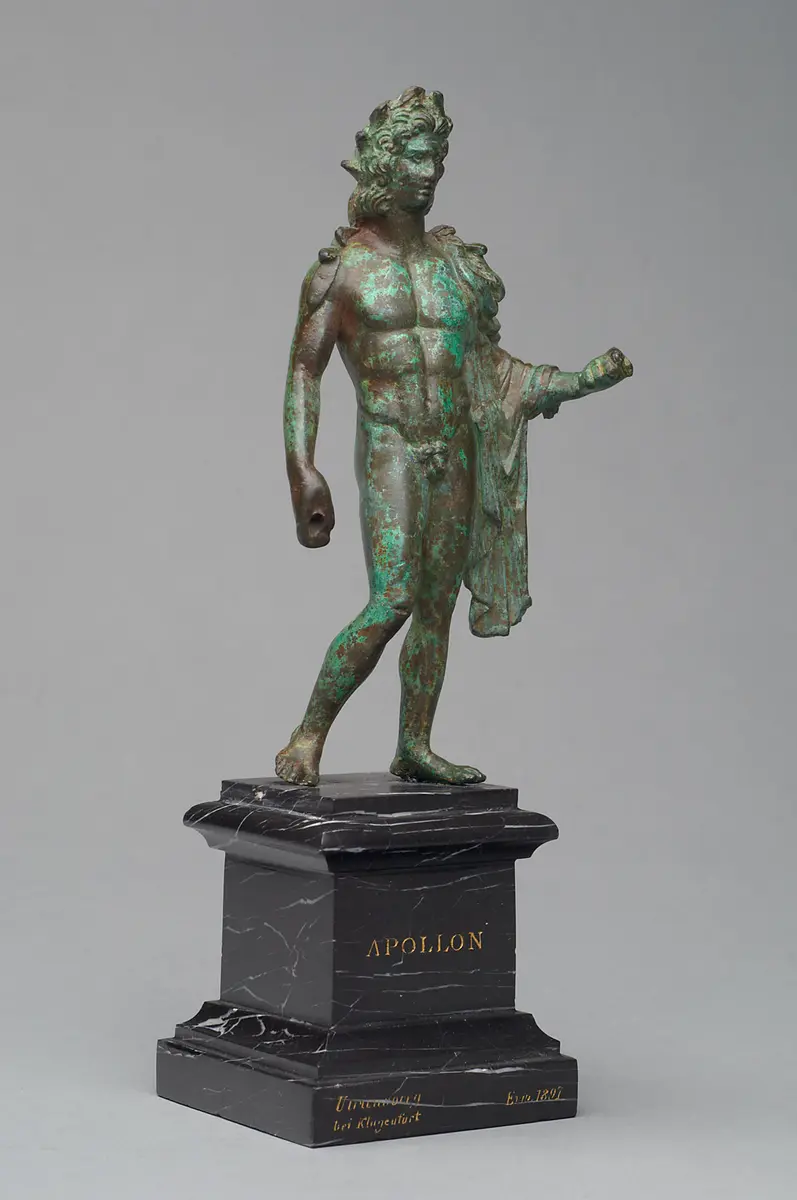
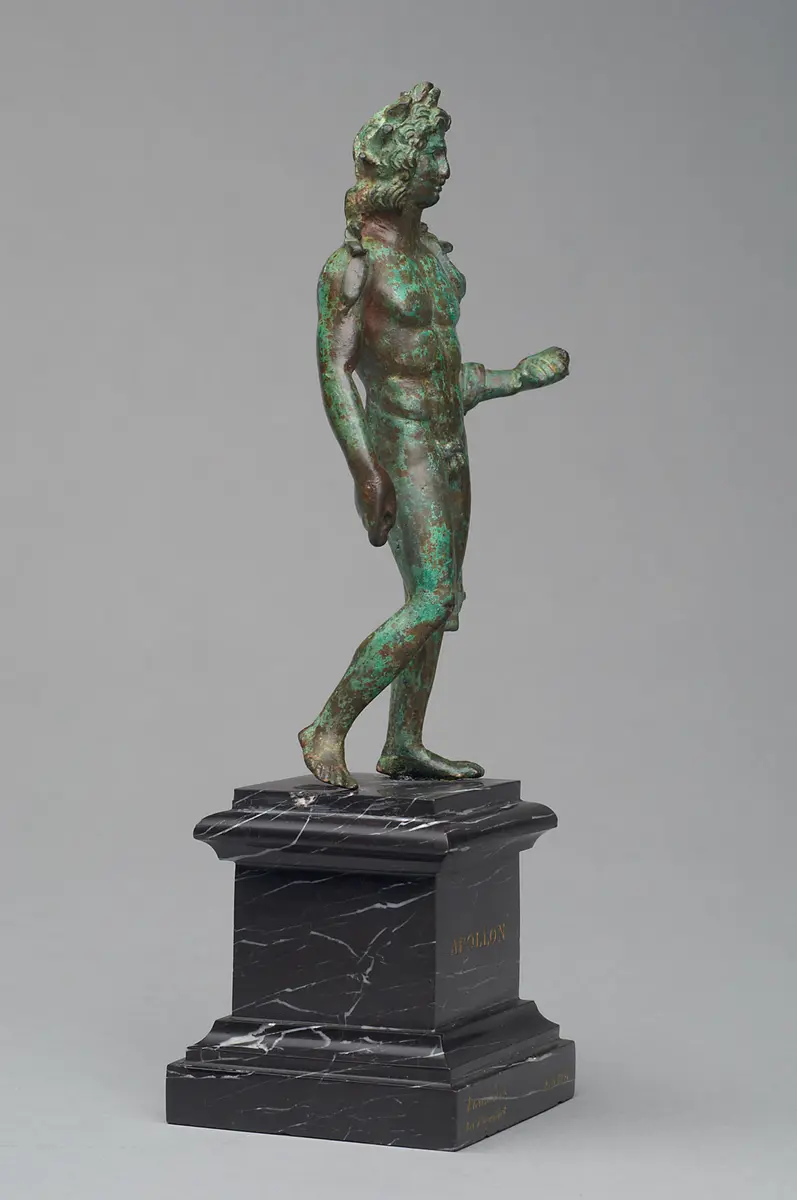
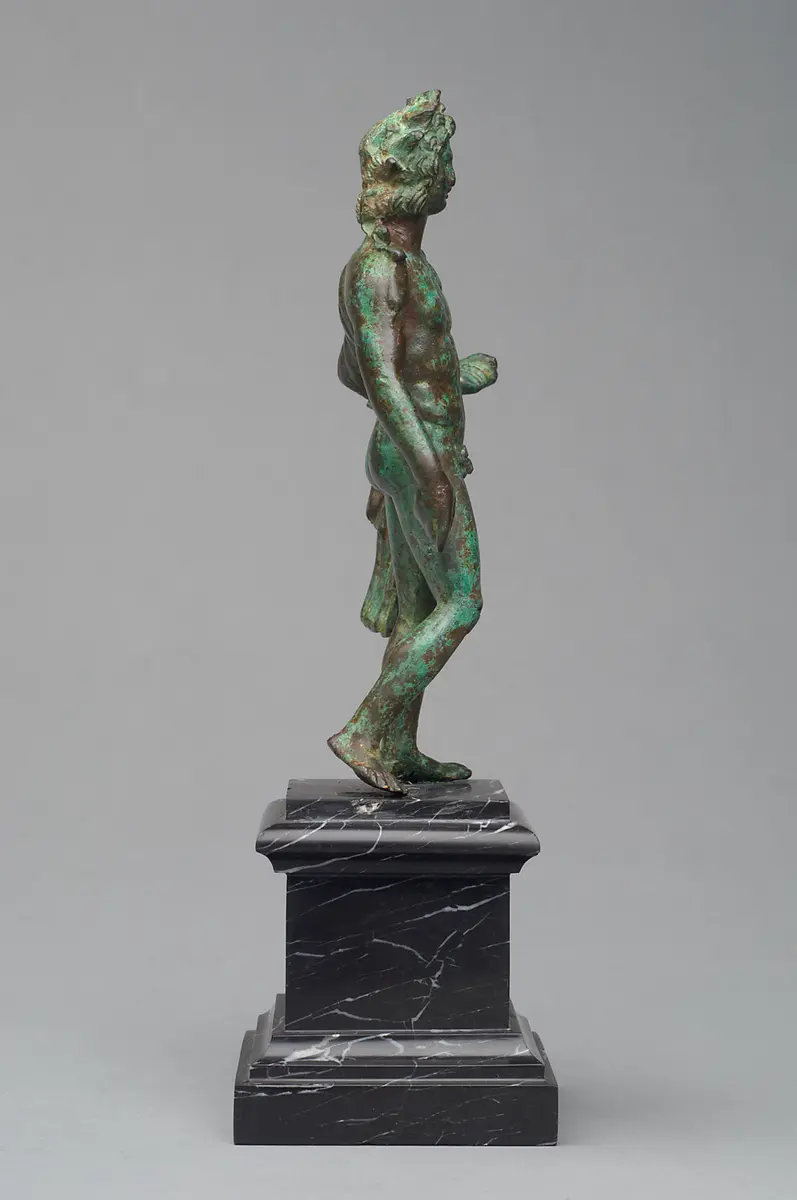
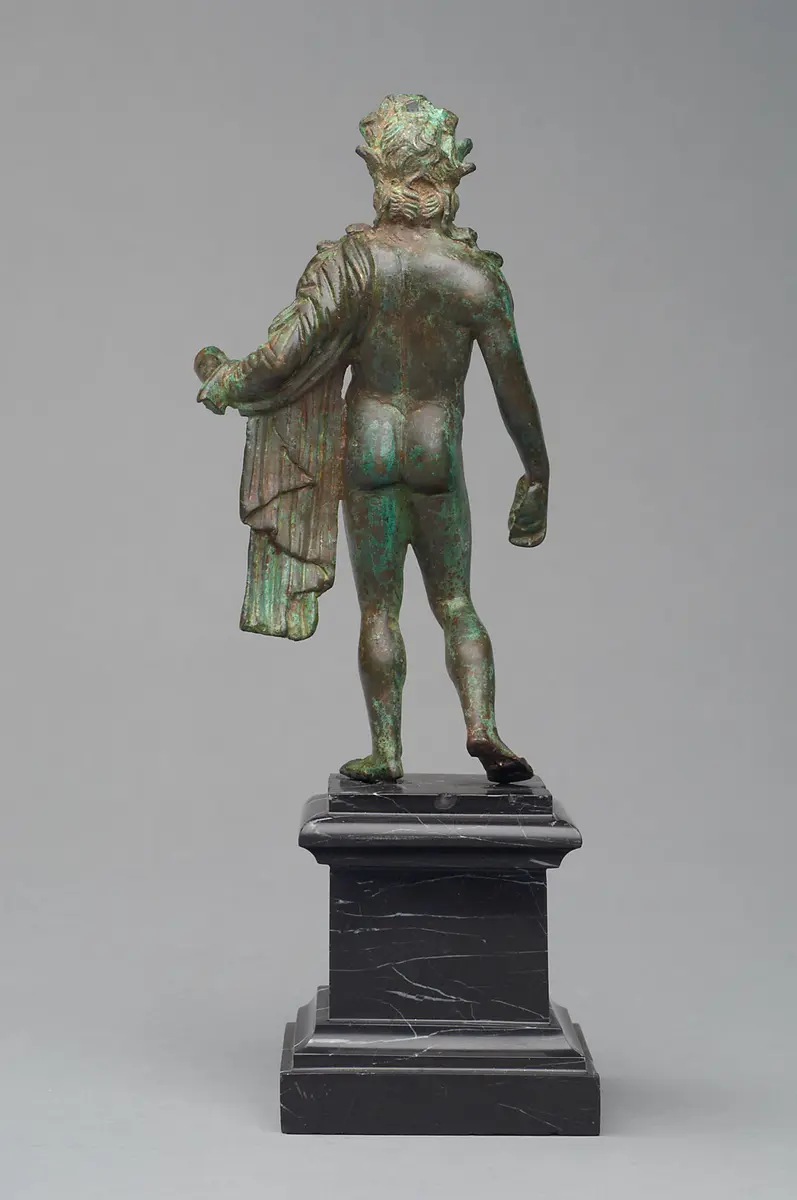
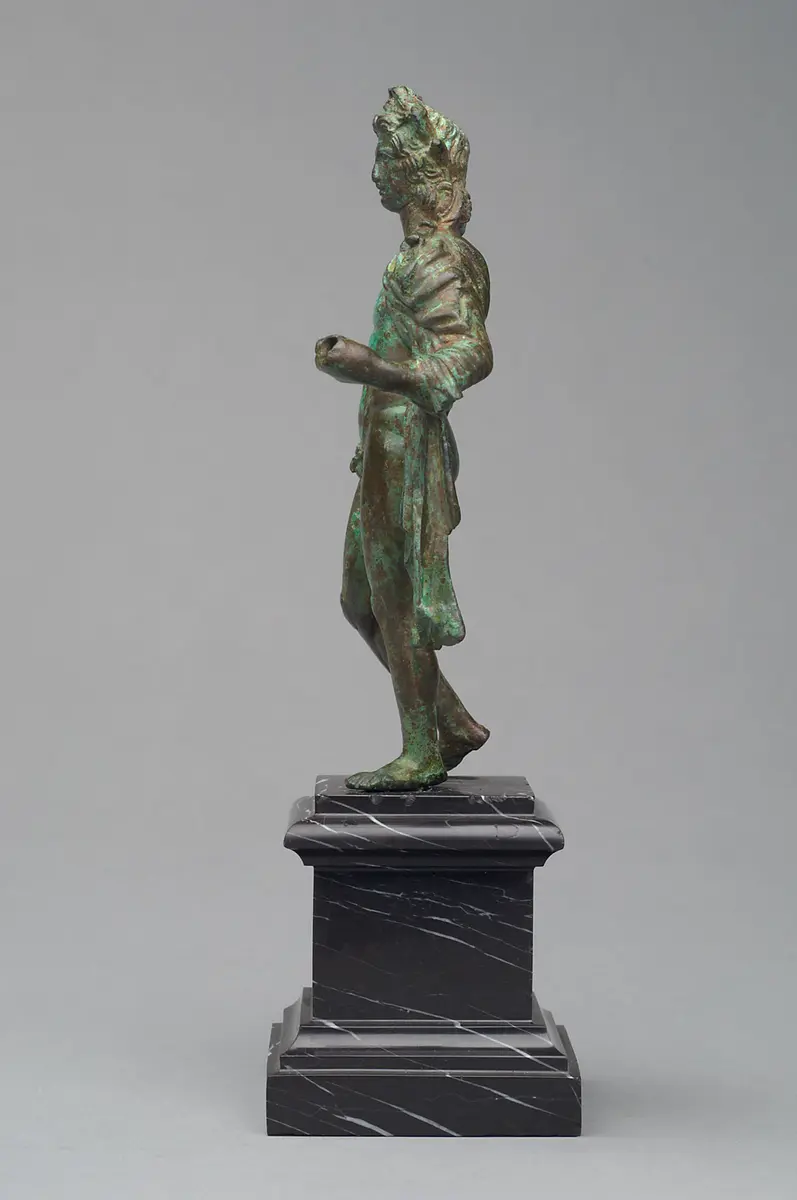
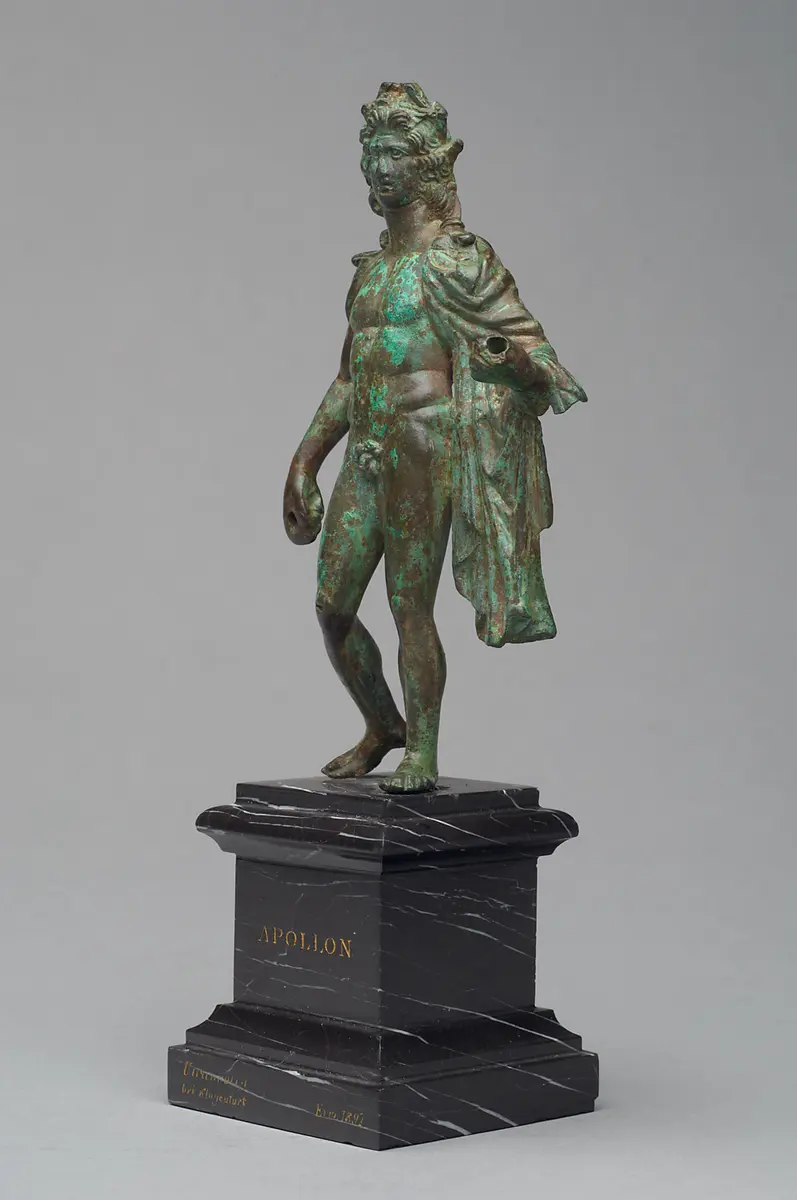
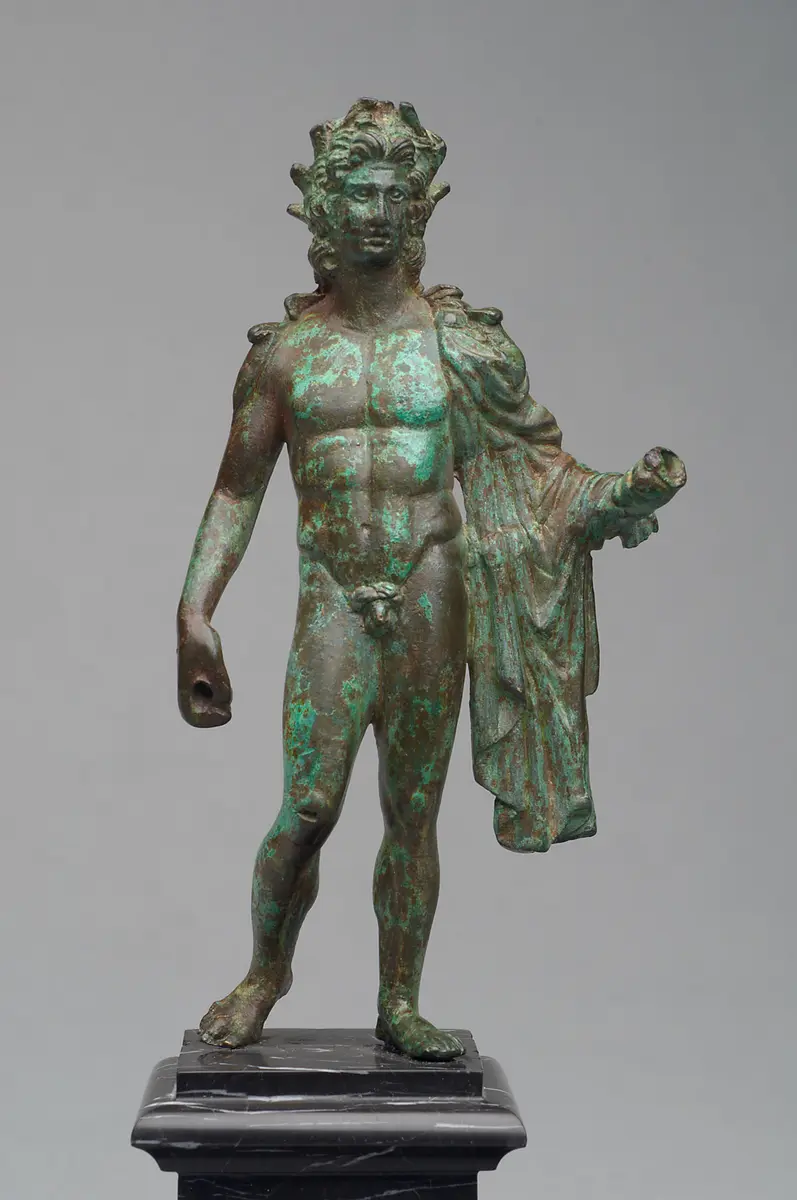
Die linke Schulter und der Oberarm des Gottes sind von einem Mantel bedeckt. Im Haar - die mähnenartige Frisur mit dem aufstrebenden Mittelbüschel erinnert an die Haartracht Alexanders des Großen - ein Blattkranz, beide Hände umfassten stabförmige - jetzt fehlende - Attribute. Möglicherweise stellt die Statuette nicht Apollo, sondern einen der Dioskuren dar: Der Rest eines Silberstiftes im Scheitel könnte von einem Stern stammen; die Attribute in den Händen wären in diesem Fall Lanze und Schwert.
Time:
2. Jh. n. Chr., nach griech. Vorbild der 2. Hälfte 4. Jh. v. Chr.
Object Name
Statuette
Culture
Römisch
Location of discovery:
Ulrichsberg bei Klagenfurt (Kärnten, Österreich)
Material/technology:
Bronze, Hohlguß (?)
Dimensions:
L/H 14,5 cm
Copyright
Kunsthistorisches Museum, Antikensammlung
Invs.
Antikensammlung, VI 2876
Provenance
Ziffrer, Fr., Klagenfurt; 1897 Kauf
Browse more
Similar items you might be interested in
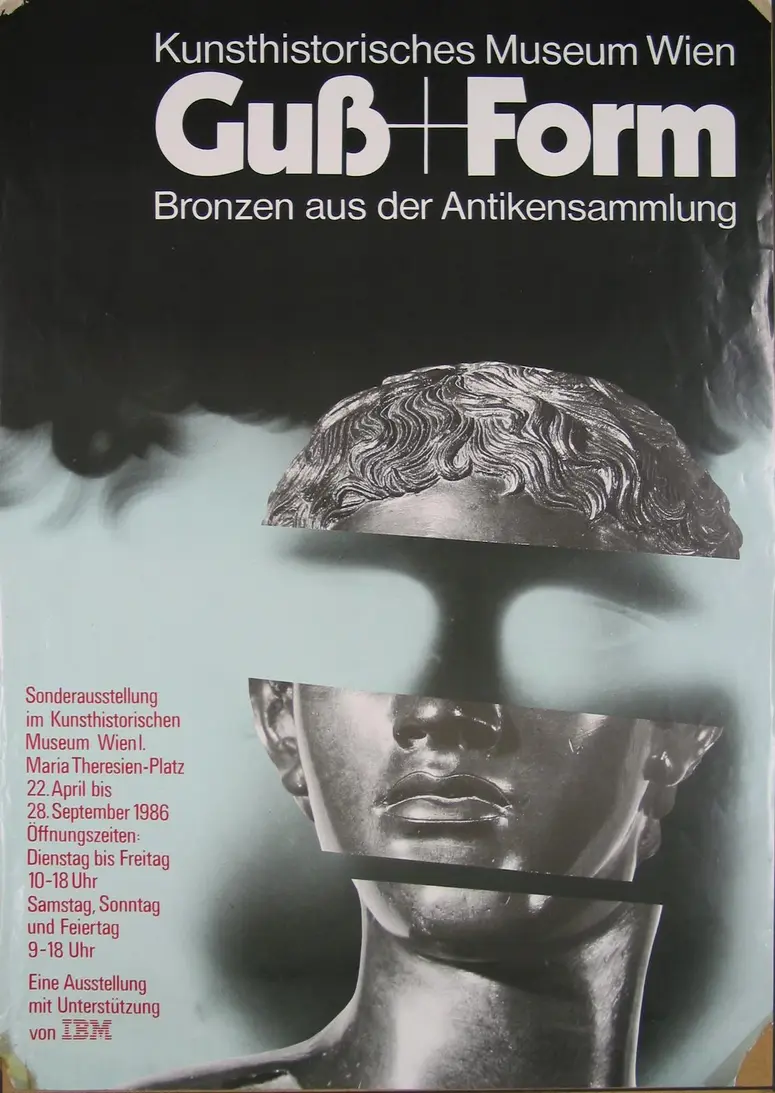
Ausstellungsplakat: Guß und Form. Bronzen aus der Antikensammlung Kunsthistorisches Museum Wien, Wien 1986