Antenkapitell
1. Hälfte 2. Jh. n. Chr.
Die Zugänge, die vom ephesischen Hafen auf die Hauptstraßen von Ephesos führten, waren in der Kaiserzeit mit Prunktoren inszeniert. Eine der Hauptachsen der Stadt war die Arkadiane, die Straße, die den Hafen mit dem großen Theater von Ephesos verband. Am Westende der Straße wurde in hadrianischer Zeit (Mitte 2. Jh. n. Chr.) das Mittlere Hafentor errichtet. Das Tor bestand aus vier Säulenbaldachinen, die von jeweils vier ionischen Säulen gebildet wurden. Die Baldachine waren durch eine Mauer verbunden, in die drei Türöffnungen gesetzt waren. An den Schmalseiten stand in der Flucht der Mauer zwischen den äußeren Säulen je ein Pfeiler. Der Torbau war mit qualitätvoller Bauornamentik geschmückt. Die ionischen Kapitelle folgen klassischen Vorbildern des 5. Jahrhunderts v. Chr. Die gestalterischen Rückgriffe werden besonders an den Pfeiler- und Antenkapitellen deutlich: Die Seitenflächen dieser Bauteile sind mit einem Akanthusblatt dekoriert, unter dem Voluten aufwachsen. Diese entwickeln sich entlang der Kanten und rollen sich als seitliche Abschlüsse der profilierten Dekorleisten der Hauptseiten (Eierstab, hängende Palmetten, Eierstab) ein. Vorlagen dafür sind archaische und klassische Antenkapitelle wie jene des Apollotempels in Didyma. Folgende Bauteile gelangten vom Mittleren Hafentor nach Wien: eines der 16 ionischen Kapitelle, zwei Antenkapitelle (über den seitlichen Durchgängen), ein Pfeilerkapitell von der Schmalseite und eine Türkonsole des mittleren Durchgangs.
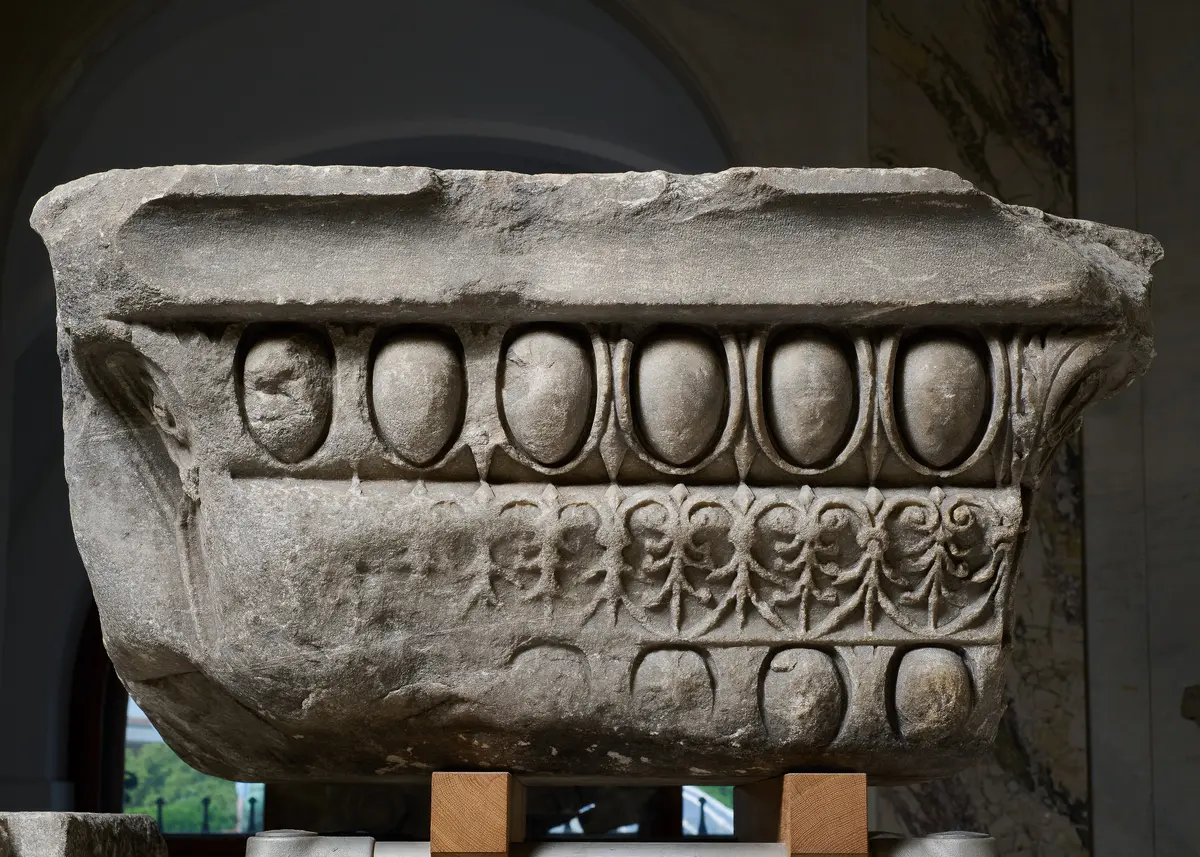
Die Zugänge, die vom ephesischen Hafen auf die Hauptstraßen von Ephesos führten, waren in der Kaiserzeit mit Prunktoren inszeniert. Eine der Hauptachsen der Stadt war die Arkadiane, die Straße, die den Hafen mit dem großen Theater von Ephesos verband. Am Westende der Straße wurde in hadrianischer Zeit (Mitte 2. Jh. n. Chr.) das Mittlere Hafentor errichtet. Das Tor bestand aus vier Säulenbaldachinen, die von jeweils vier ionischen Säulen gebildet wurden. Die Baldachine waren durch eine Mauer verbunden, in die drei Türöffnungen gesetzt waren. An den Schmalseiten stand in der Flucht der Mauer zwischen den äußeren Säulen je ein Pfeiler. Der Torbau war mit qualitätvoller Bauornamentik geschmückt. Die ionischen Kapitelle folgen klassischen Vorbildern des 5. Jahrhunderts v. Chr. Die gestalterischen Rückgriffe werden besonders an den Pfeiler- und Antenkapitellen deutlich: Die Seitenflächen dieser Bauteile sind mit einem Akanthusblatt dekoriert, unter dem Voluten aufwachsen. Diese entwickeln sich entlang der Kanten und rollen sich als seitliche Abschlüsse der profilierten Dekorleisten der Hauptseiten (Eierstab, hängende Palmetten, Eierstab) ein. Vorlagen dafür sind archaische und klassische Antenkapitelle wie jene des Apollotempels in Didyma. Folgende Bauteile gelangten vom Mittleren Hafentor nach Wien: eines der 16 ionischen Kapitelle, zwei Antenkapitelle (über den seitlichen Durchgängen), ein Pfeilerkapitell von der Schmalseite und eine Türkonsole des mittleren Durchgangs.
Time:
1. Hälfte 2. Jh. n. Chr.
Object Name
Kapitell
Culture
Römisch
Location of discovery:
Ephesos Mittleres Hafentor (Selçuk, Kleinasien, Türkei)
Material/technology:
Marmor
Dimensions:
L. (Abakus) 89 cm; B. (Abakus) 89 cm: L/H 45 cm
Copyright
Kunsthistorisches Museum, Antikensammlung
Invs.
Antikensammlung, I 1629 c
Provenance
Sultan, Abdul, Hamid, II.; Österreichische Ausgrabungen in Ephesos; Geschenk an Kaiser Franz Joseph; 1957 nachträglich inventarisiert