Allegory of the Earthly Pilgrimage
2nd quarter 16th c. | Joachim Forster
Autonomous, small bronze objets d’art such as statuettes and plaquettes became popular north of the Alps only after 1500. Nuremberg and Augsburg were the first centres to introduce Italian Renaissance models to the local traditions of bronze casting. However, these works often also served a decorative purpose, being applied to furniture, doors or fountains.
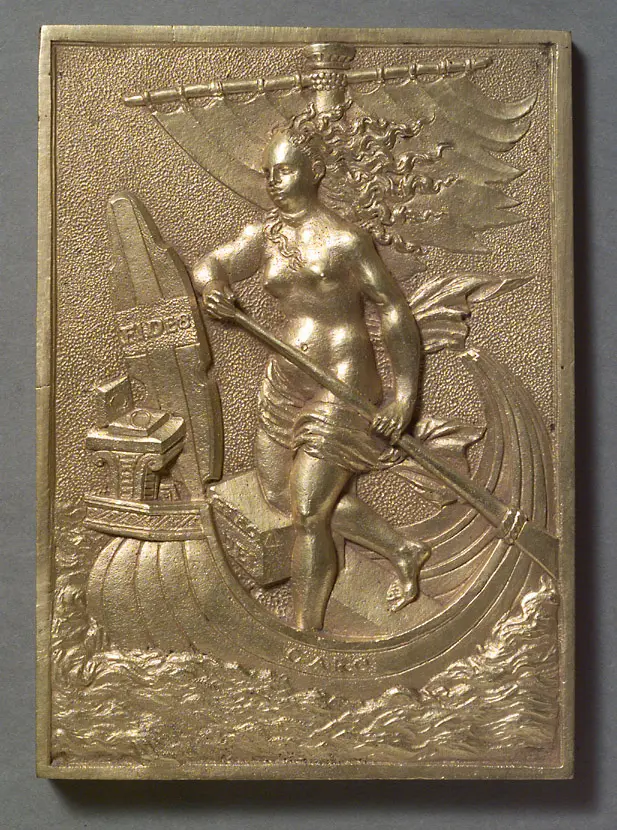
Autonomous, small bronze objets d’art such as statuettes and plaquettes became popular north of the Alps only after 1500. Nuremberg and Augsburg were the first centres to introduce Italian Renaissance models to the local traditions of bronze casting. However, these works often also served a decorative purpose, being applied to furniture, doors or fountains.
Attributed to:
Joachim Forster (um 1500 Augsburg - 1579 Augsburg)
Time:
2nd quarter 16th c.
Object Name
relief; plaque; bronze sculpture
Culture
Augsburg
Material/technology:
Gilded bronze
Dimensions:
13,6 cm × 9,8 cm × 1,2 cm
Inscribed
"CARO"; "FIDES"; "GRACIA DEI"
Copyright
Kunsthistorisches Museum, Kunstkammer
Invs.
Kunstkammer, 6043
Browse more
Similar items you might be interested in
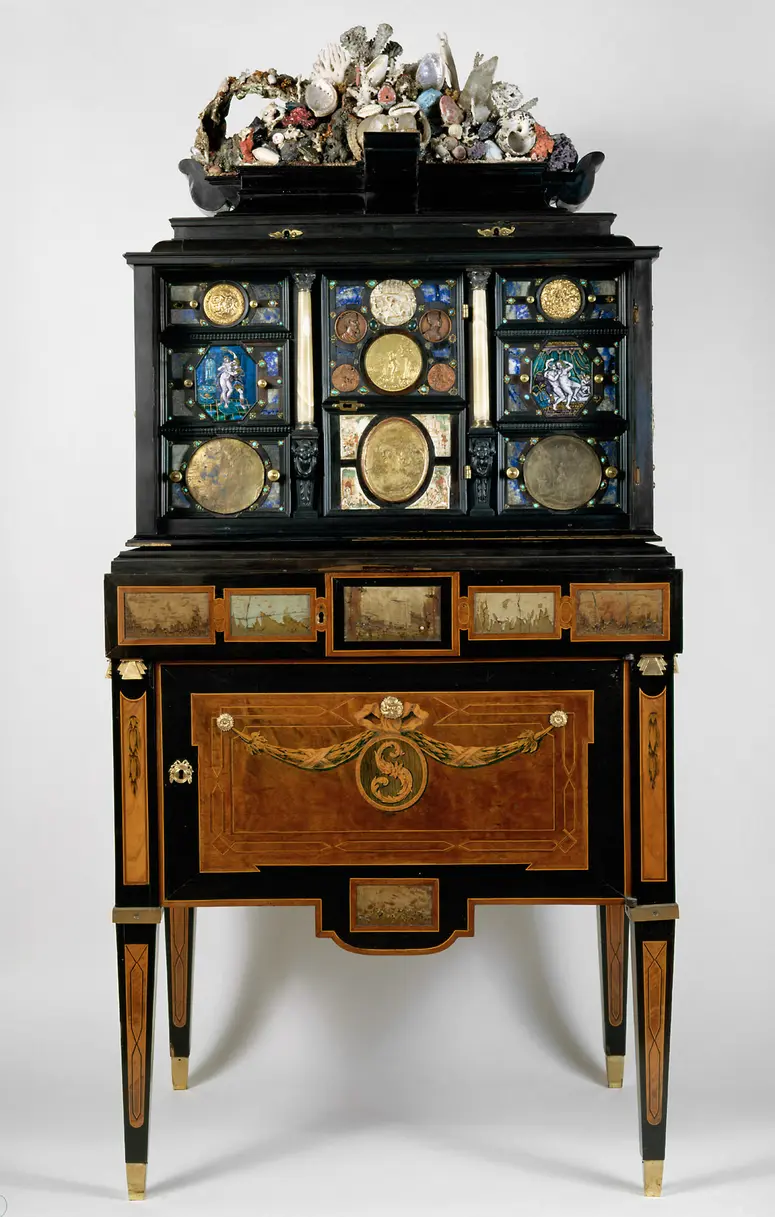
Cabinet, so-called Wrangel Cabinet Ulrich Baumgartner 1631–34 (cabinet); dated 1776 (stand)
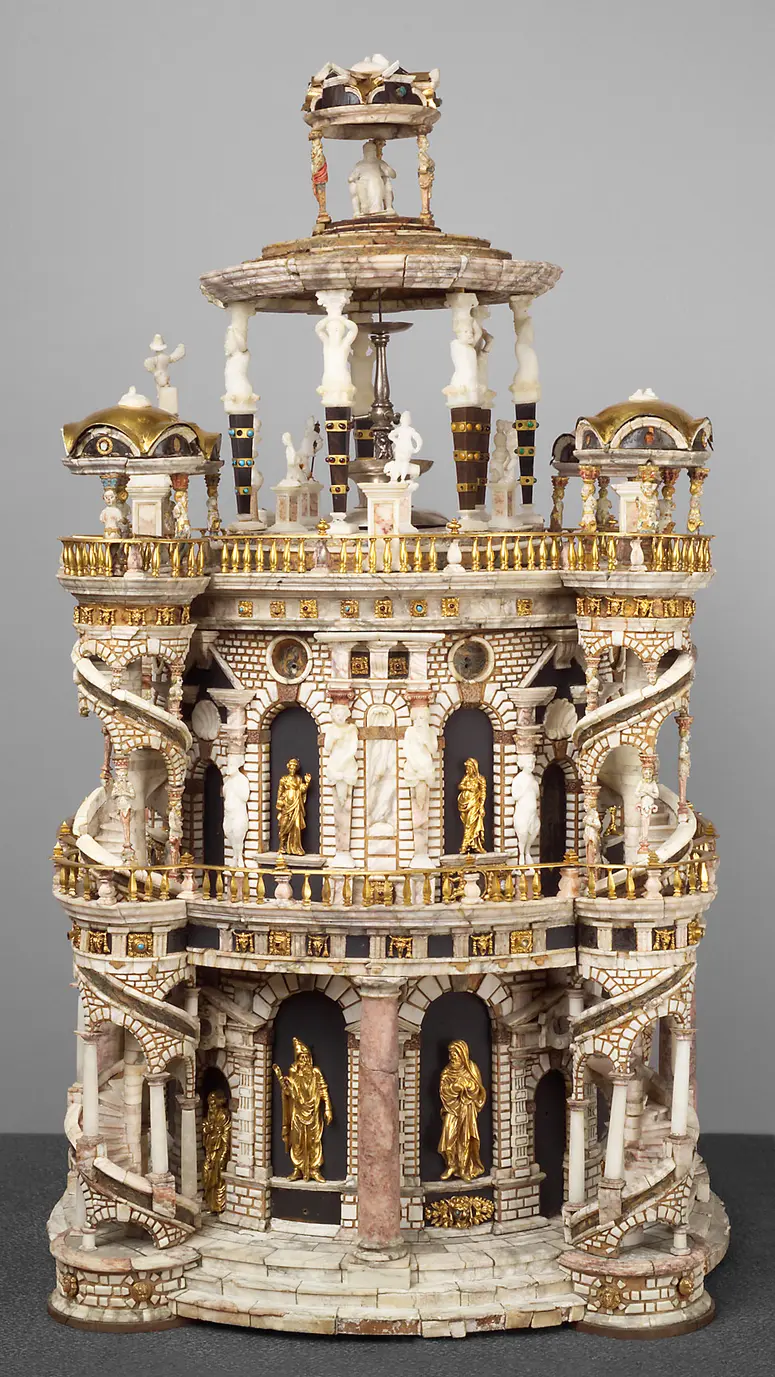
Münzschrank, Kabinettschrank, Möbel Ende 16. Jahrhundert
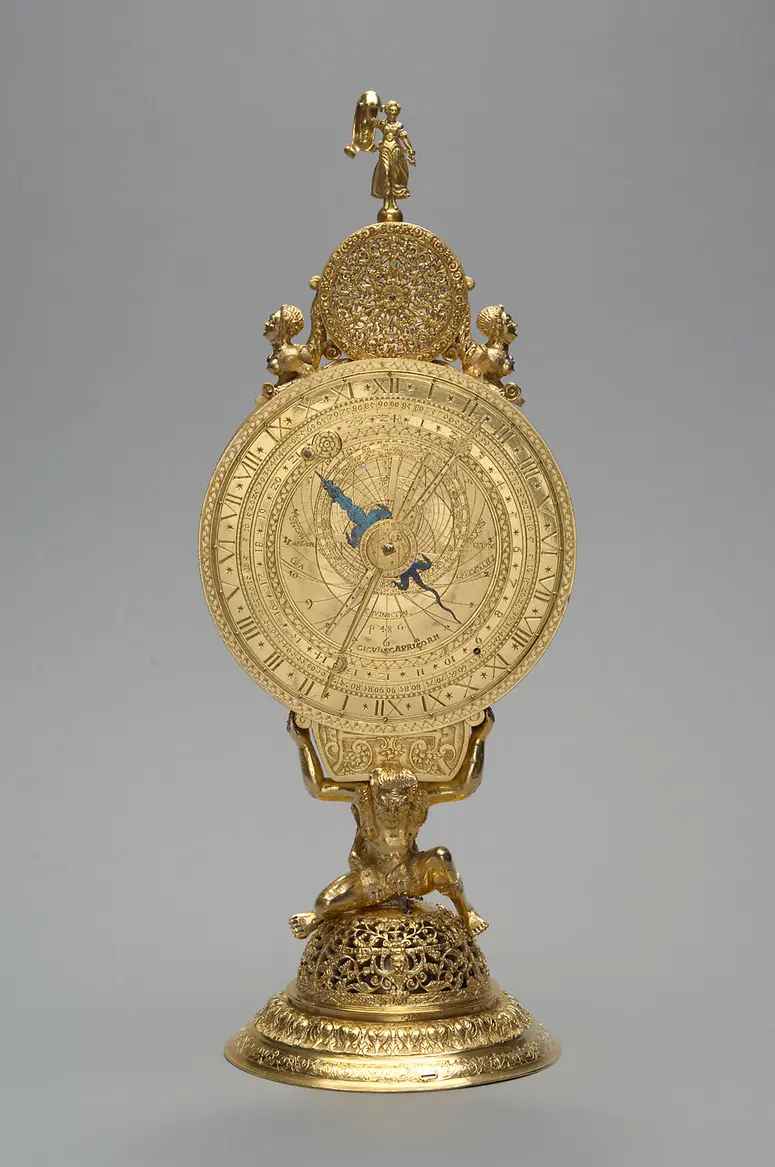
Gondelautomat, Automat, Tafelaufsatz Joachim Fries (auch Friss) um 1600
Coin Cabinet of Archduke Ferdinand II Ferdinand II. (1564-1595), Erzherzog von Österreich und Landesherr von Tirol ca. 1580

Elisabeth von Görz-Tirol, Statue, Statuette, Terracotta Dominicus Custos um 1600
Kaiser Rudolf II., Statue, Statuette, Terracotta Rudolf II. (1576-1612), Kaiser, römischer König ab 1575, König von Ungarn ab 1572, von Böhmen se um 1600