Gebetbuch Kaiser Ferdinands II.
um 1590
The first six pages of this miniature prayer-book contain the devices of various members of the Habsburg and Wittelsbach families, mostly written in their own hands. These entries and certain references in the following prayer texts indicate that it was owned by Emperor Ferdinand II. The Emperor received it as a boy from his parents, Archduke Karl II of Inner Austria and Archduchess Maria, daughter of Duke Albrecht V of Bavaria, when he began his studies at the Jesuit College in Ingolstadt. Although miniature prayer - books were popular in European court art around 1600, only isolated examples have survived. The costly gold cover is richly enamelled with a scrolling pattern enclosing an oval cartouche, This contains the initials MA for Maria on t he front cover, and IHS surrounded by a cross and the three nails from the cross for Jesus on the back As it is typical for the style of the late l6th century the scrollwork does not develop freely, but is incorporated into the superordinate motif enclosing the cartouche. Enamel work of this kind was chiefly executed at Augsburg and Nuremberg but also at other centres such as Munich and Salzburg.
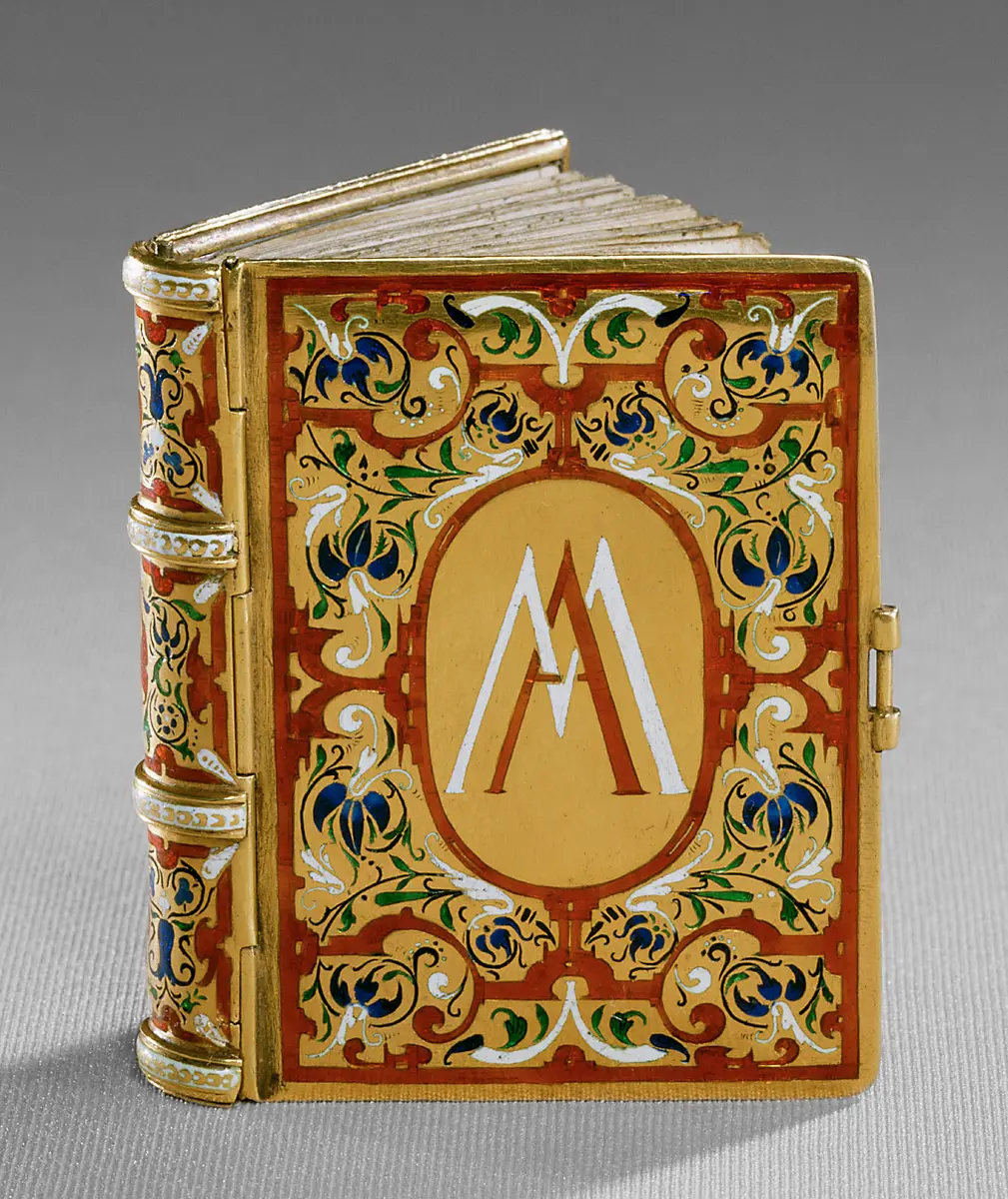
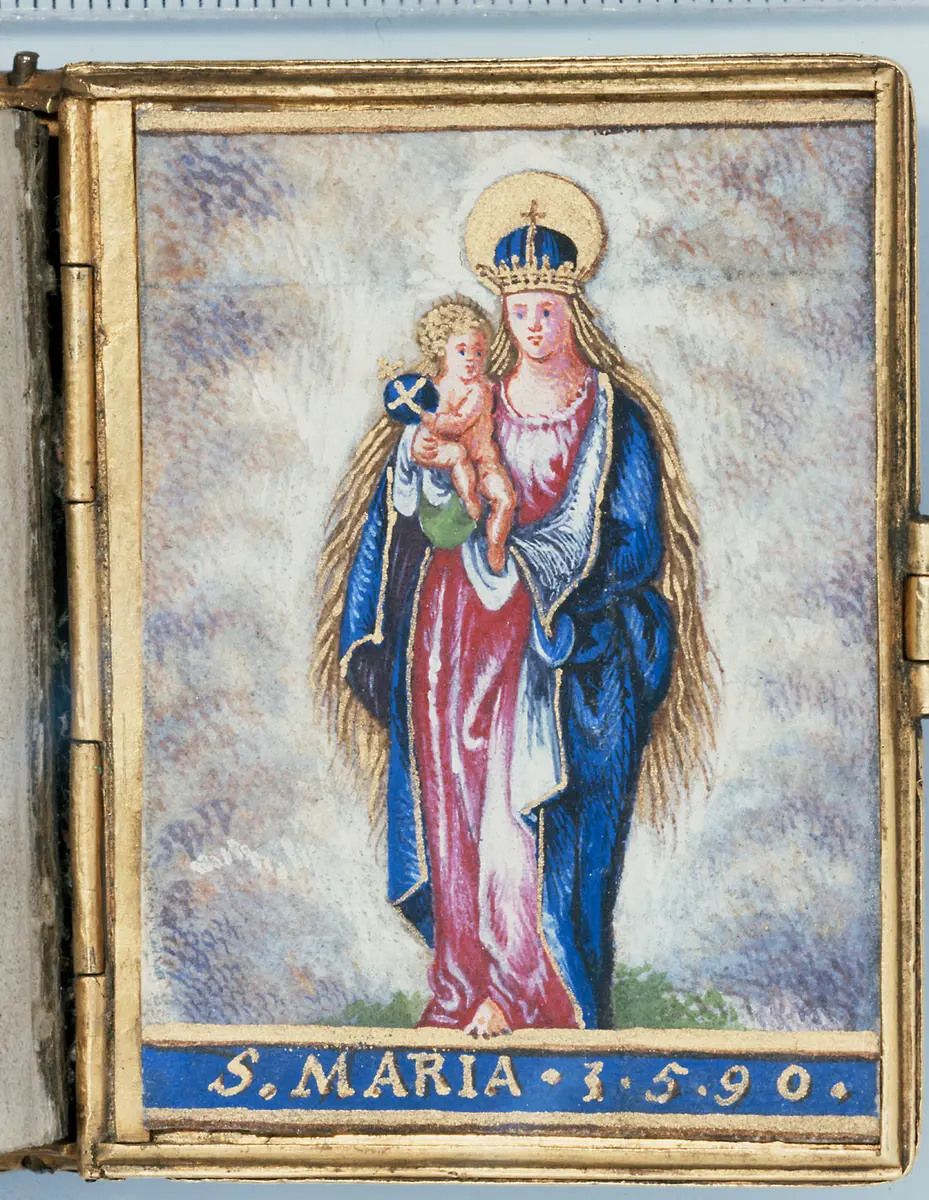
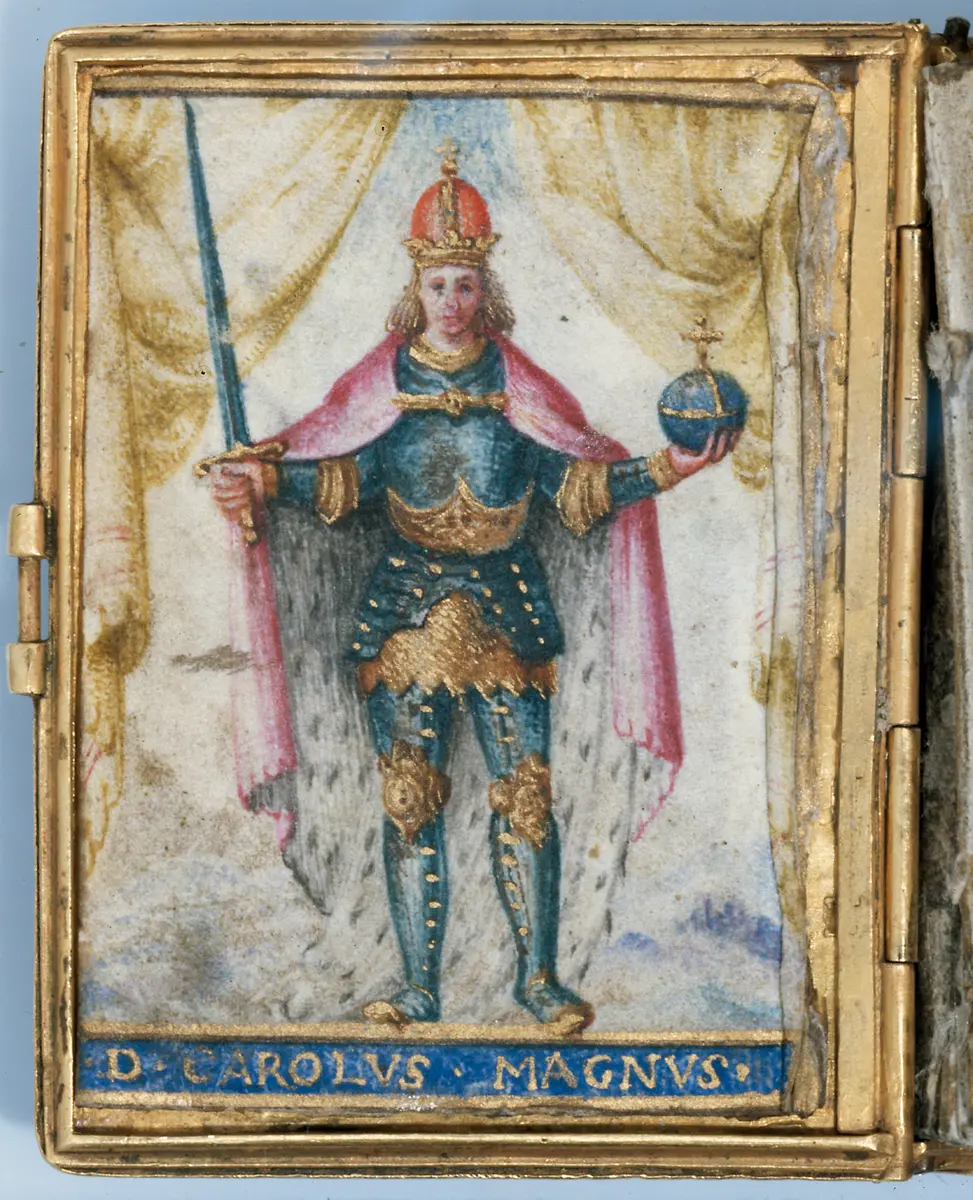
The first six pages of this miniature prayer-book contain the devices of various members of the Habsburg and Wittelsbach families, mostly written in their own hands. These entries and certain references in the following prayer texts indicate that it was owned by Emperor Ferdinand II. The Emperor received it as a boy from his parents, Archduke Karl II of Inner Austria and Archduchess Maria, daughter of Duke Albrecht V of Bavaria, when he began his studies at the Jesuit College in Ingolstadt. Although miniature prayer - books were popular in European court art around 1600, only isolated examples have survived. The costly gold cover is richly enamelled with a scrolling pattern enclosing an oval cartouche, This contains the initials MA for Maria on t he front cover, and IHS surrounded by a cross and the three nails from the cross for Jesus on the back As it is typical for the style of the late l6th century the scrollwork does not develop freely, but is incorporated into the superordinate motif enclosing the cartouche. Enamel work of this kind was chiefly executed at Augsburg and Nuremberg but also at other centres such as Munich and Salzburg.
Time:
um 1590
Object Name
Buch; Gebetbuch
Culture
Süddeutsch, Augsburg (?)
Material/technology:
Gold, emailliert, Pergament mit Goldschnitt Gouache und Goldfarbe auf Papier
Dimensions:
H. 6,1 cm, B. 5,2 cm, T. 1,2 cm
Blattgröße: H. 5,6 cm, B. 4,4 cm
Inscribed
"MA"; "IHS" (Deckel außen); "D(IVVS) CAROLVS MAGNVS"; "S(ANCTA) MARIA 1590" (Pergamentminiaturen Deckelinnenseite)
Stamp / markings
Wr. Repunze 1806/07
Copyright
Kunsthistorisches Museum, Geistliche Schatzkammer
Invs.
Schatzkammer, GS D 27