Cittern
1574 | Girolamo de Virchis
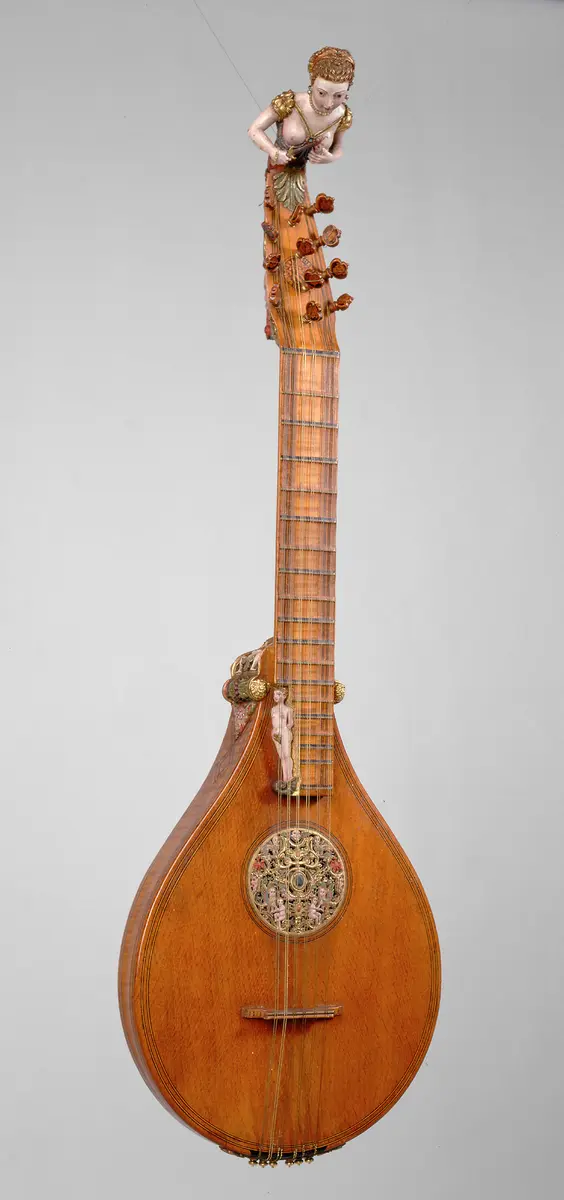
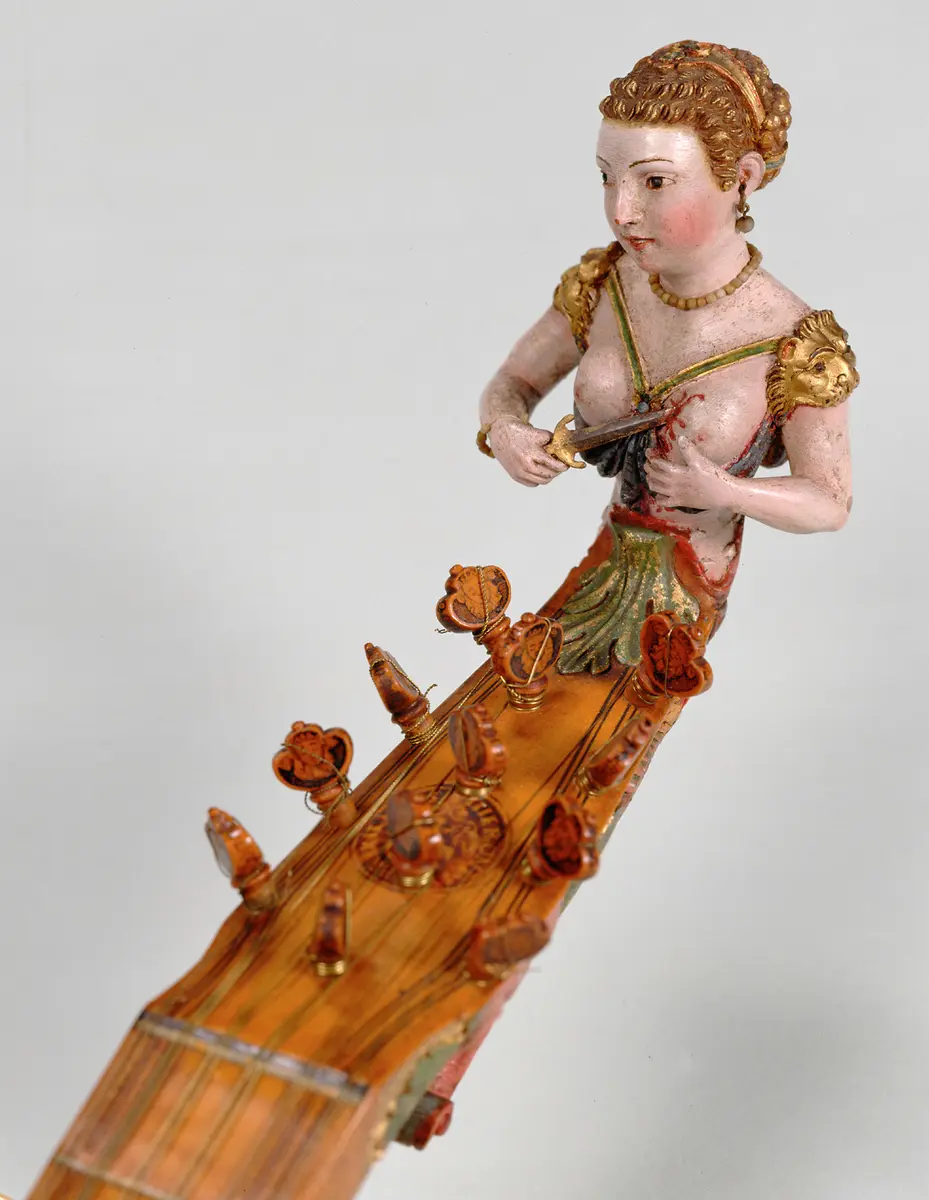
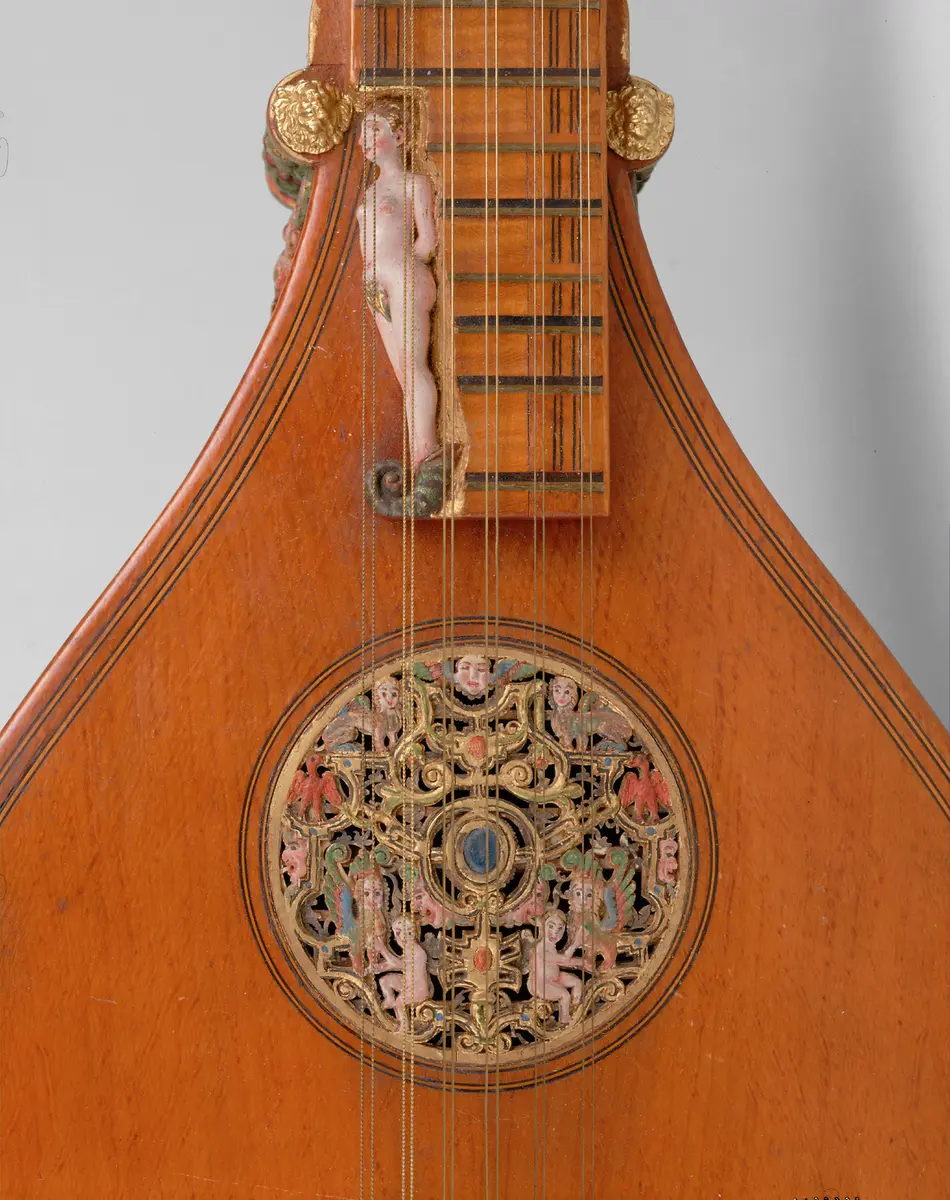
The cittern of Girolamo de Virchi (ca. 1523-p.1574) is perhaps one of the most opulent and beautifully decorated instruments in the entire history of music. It was part of the famous Kunst und Wunderkammer of Archduke Ferdinand in Ambras Castle near Innsbruck. With the exception of the resonating parts of the instrument, which are plain, each component part is artistically decorated. At the neckfoot is a reference to its owner: Ferdinand’s coat of arms, above which two half-length female figures hold the archducal hat. The rosette shows exceptionally artistic craftsmanship with its partly gilded and coloured carvings. The optical highlight of the instrument is the decorative carving above the headstock. A grimacing face melds into a dragon-like monster. Out of its jaws emerges a female figure, that can easily be identified as Lucretia. According to legend, this Roman noblewoman could not bear to live with the shame of being dishonoured and killed herself with a dagger. The scene is depicted with surprising realism. The figure’s headwear and clothes are those of a Renaissance Lady of nobility. Even the earrings are made en miniature from real pearls. (rh)
Lit: Rudolf Hopfner: Masterpieces from the Collection of Historic Musical Instruments. A Short Guide through the Kunsthistorisches Museum Vienna, Vol. 1, Vienna 2019
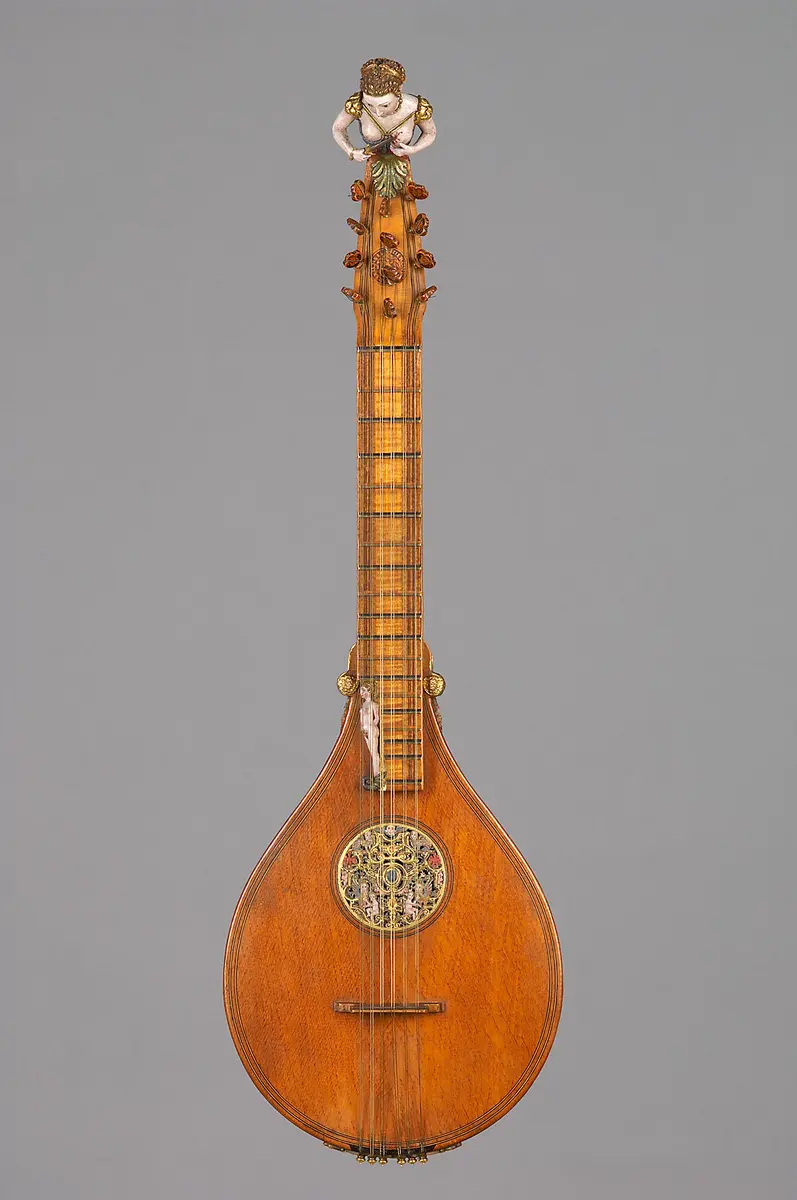
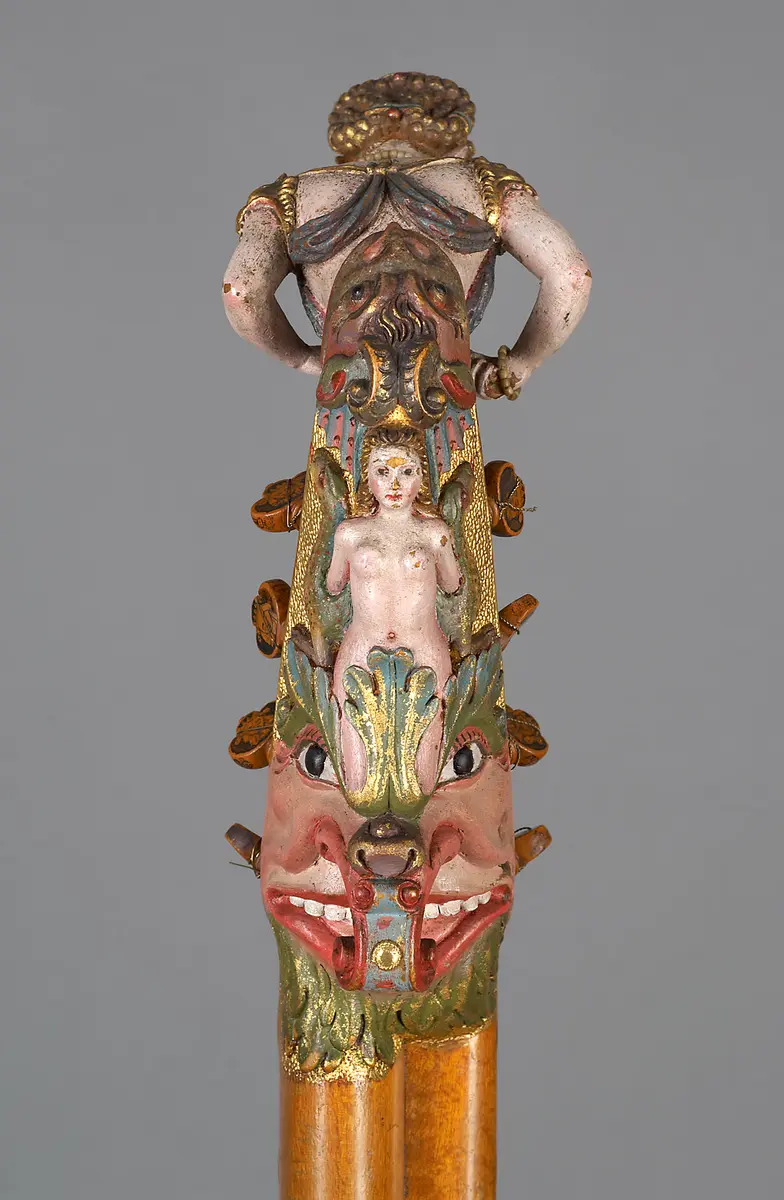
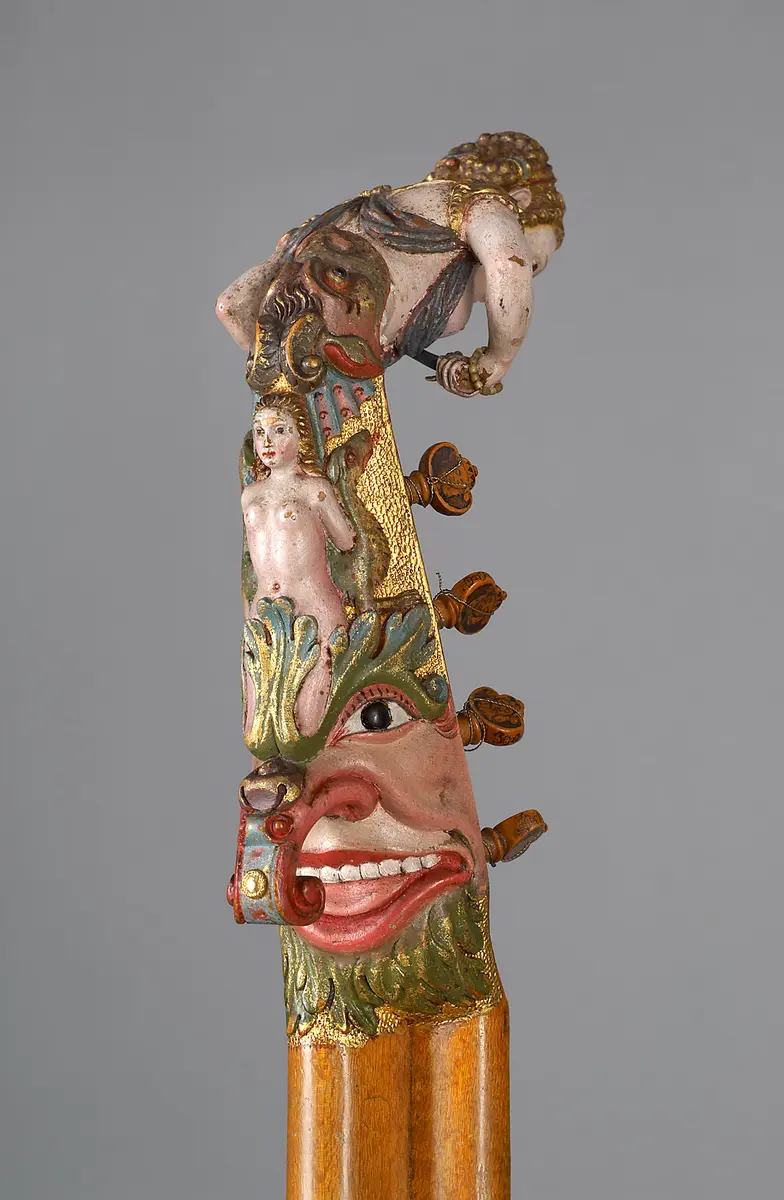
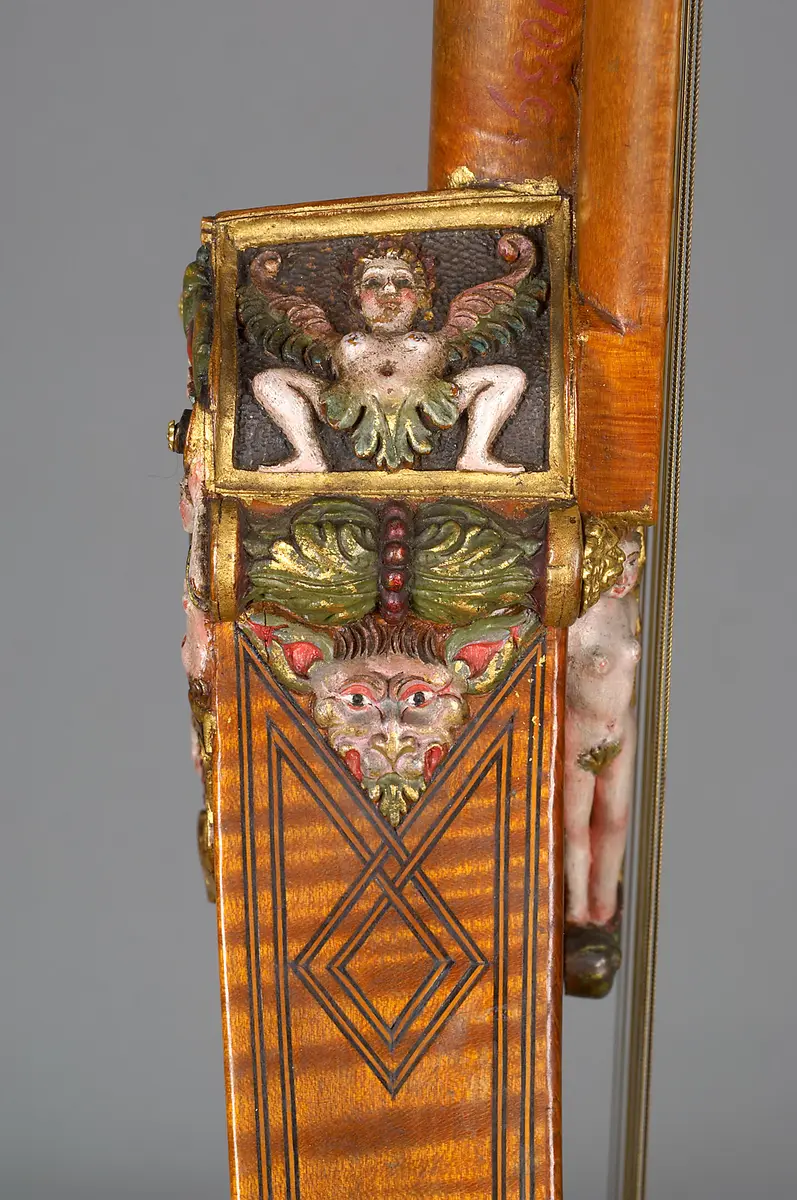
The cittern of Girolamo de Virchi (ca. 1523-p.1574) is perhaps one of the most opulent and beautifully decorated instruments in the entire history of music. It was part of the famous Kunst und Wunderkammer of Archduke Ferdinand in Ambras Castle near Innsbruck. With the exception of the resonating parts of the instrument, which are plain, each component part is artistically decorated. At the neckfoot is a reference to its owner: Ferdinand’s coat of arms, above which two half-length female figures hold the archducal hat. The rosette shows exceptionally artistic craftsmanship with its partly gilded and coloured carvings. The optical highlight of the instrument is the decorative carving above the headstock. A grimacing face melds into a dragon-like monster. Out of its jaws emerges a female figure, that can easily be identified as Lucretia. According to legend, this Roman noblewoman could not bear to live with the shame of being dishonoured and killed herself with a dagger. The scene is depicted with surprising realism. The figure’s headwear and clothes are those of a Renaissance Lady of nobility. Even the earrings are made en miniature from real pearls. (rh)
Lit: Rudolf Hopfner: Masterpieces from the Collection of Historic Musical Instruments. A Short Guide through the Kunsthistorisches Museum Vienna, Vol. 1, Vienna 2019
Manufacturer:
Girolamo de Virchis (ca. 1523 Brescia - nach 1574)
Time:
1574
Object Name
Cittern
Culture
Italy, Brescia
Dimensions:
740 mm x 230 mm x 60 mm
Copyright
Kunsthistorisches Museum, Sammlung alter Musikinstrumente
Invs.
Sammlung alter Musikinstrumente, 56
Alte Inv.Nr.:
KK_4059
Schlosser Nr.:
A 61