Poseidon as Lord of the Isthmian Games (?)
mid-13th c.; early 19th c. (mounting)
As in the case of many works imitating an antique style, the significance of this representation is unclear. Separate antique motifs were obviously strung together. As central figure Poseidon, the god of the sea, is standing on a rock, with a team of tethered horses on each side. Under Emperor Frederick II glyptic art reached its apogee in the kingdom of Southern Italy-Sicily. Admiration for antiquity is one characteristic of this art form, particularly where figurative cameo carving was concerned. Hardstone carving was also promoted by the patronage of princely connoisseurs. Emperor Frederick II was notorious for his passionate interest in precious stones.
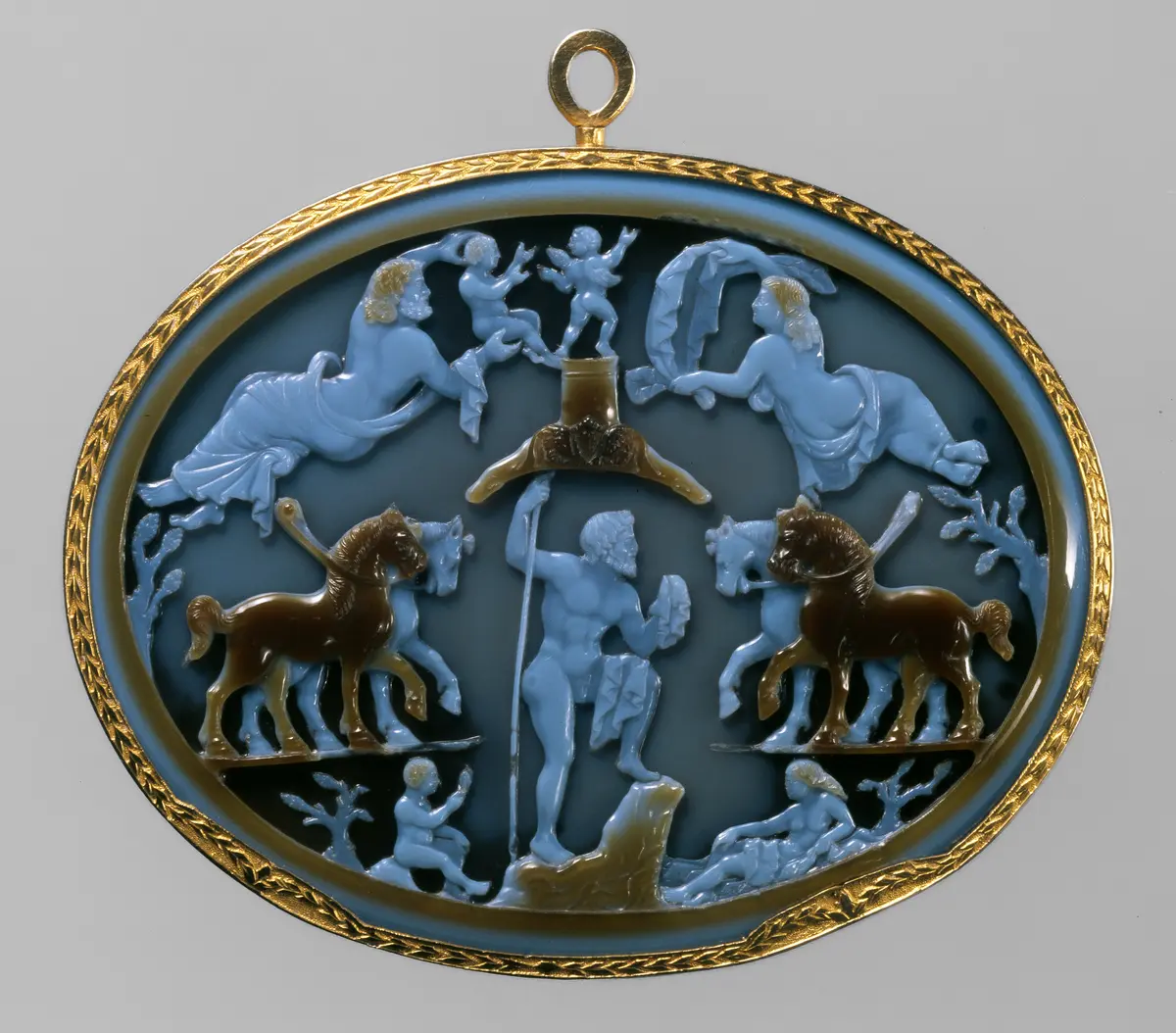
As in the case of many works imitating an antique style, the significance of this representation is unclear. Separate antique motifs were obviously strung together. As central figure Poseidon, the god of the sea, is standing on a rock, with a team of tethered horses on each side. Under Emperor Frederick II glyptic art reached its apogee in the kingdom of Southern Italy-Sicily. Admiration for antiquity is one characteristic of this art form, particularly where figurative cameo carving was concerned. Hardstone carving was also promoted by the patronage of princely connoisseurs. Emperor Frederick II was notorious for his passionate interest in precious stones.
Time:
mid-13th c.; early 19th c. (mounting)
Object Name
Cameo
Culture
Southern Italian; Vienna, (mounting)
Material/technology:
Sardonyx, gold
Dimensions:
H. 7 cm, B. 8,8 cm
Copyright
Kunsthistorisches Museum, Kunstkammer
Invs.
Antikensammlung, IXa 62
Browse more
Similar items you might be interested in
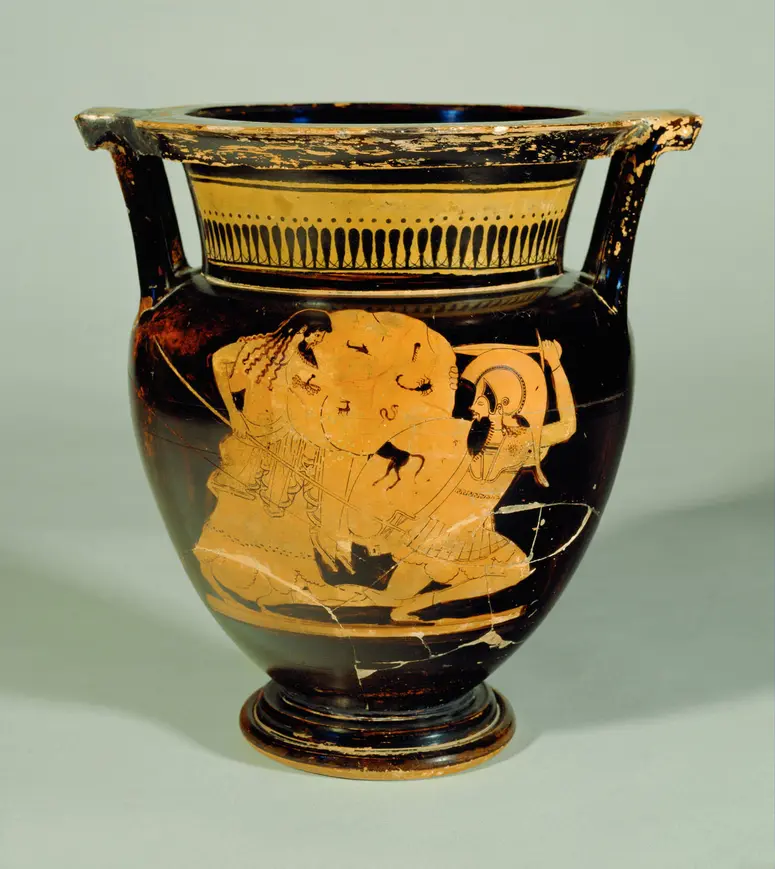
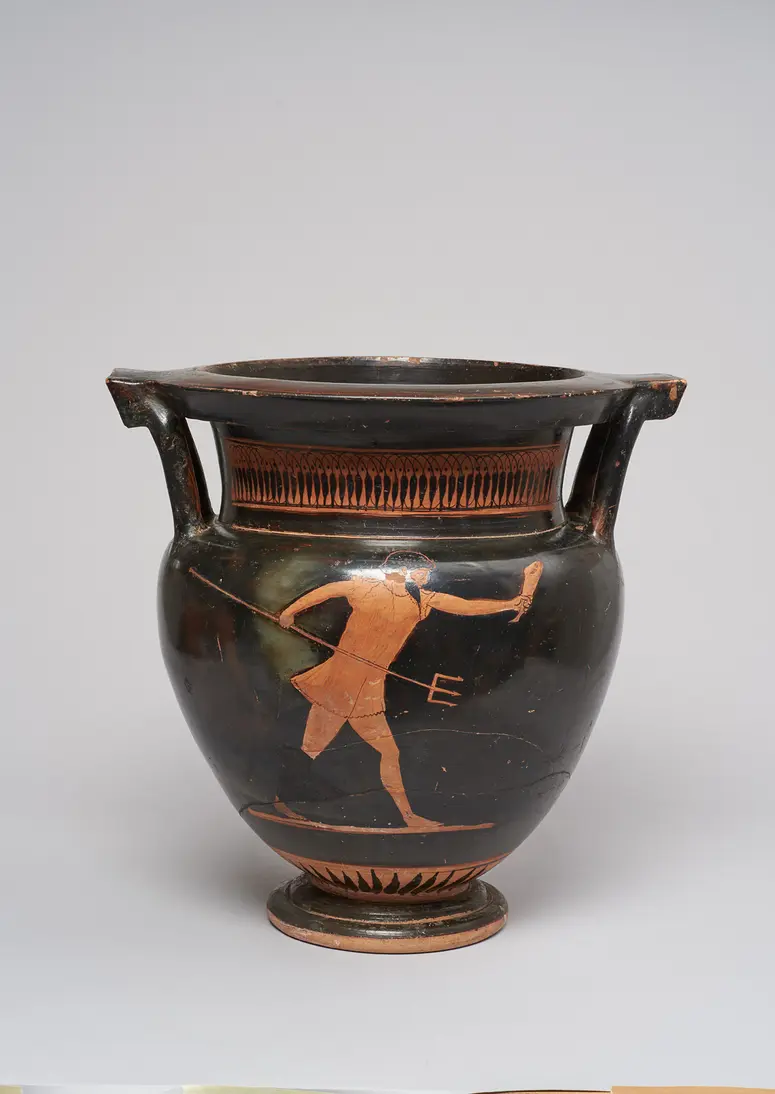
Kolonettenkrater: Poseidon im Gigantenkampf Griechisch, Attisch, rotfigurig 1. Viertel 5. Jh. v. Chr.
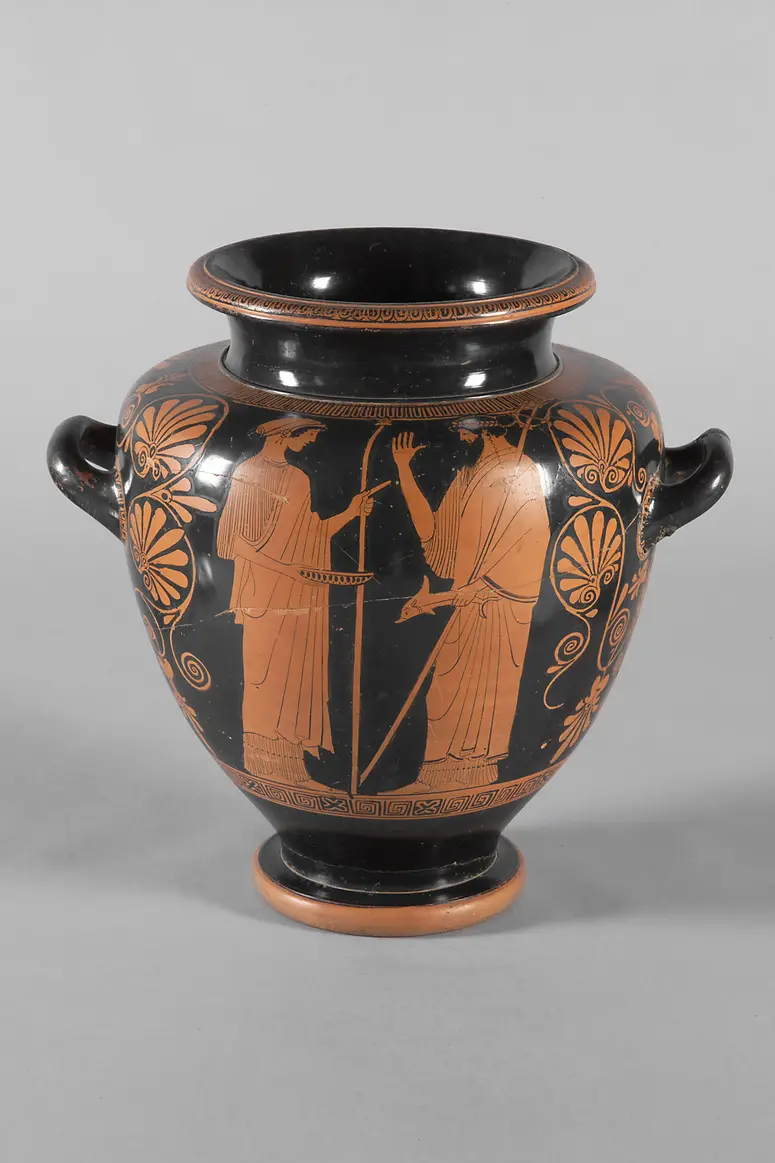

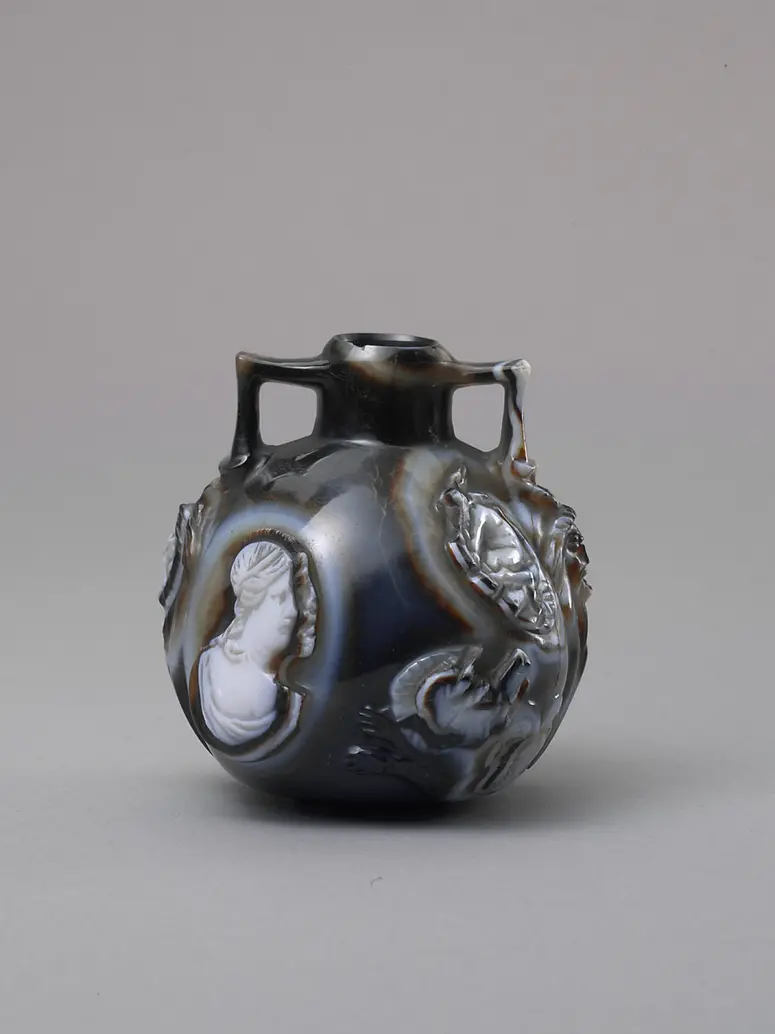
Amphoriskos: Doppelbüste der Amphitrite und des Poseidon Römisch, Republikanisch - Frühe Kaiserzeit 1. Jh. n. Chr.
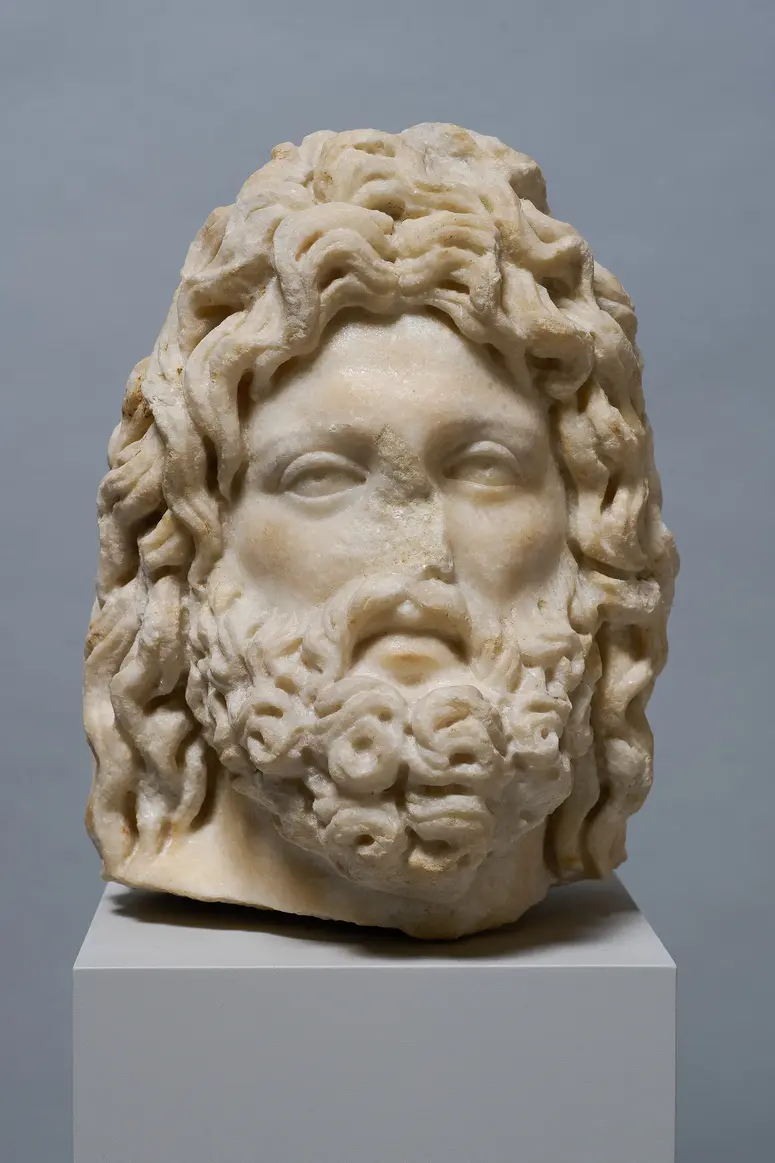
Kopf: Kopf des Poseidon Römisch, Mittlere Kaiserzeit 2. Jh. n. Chr.
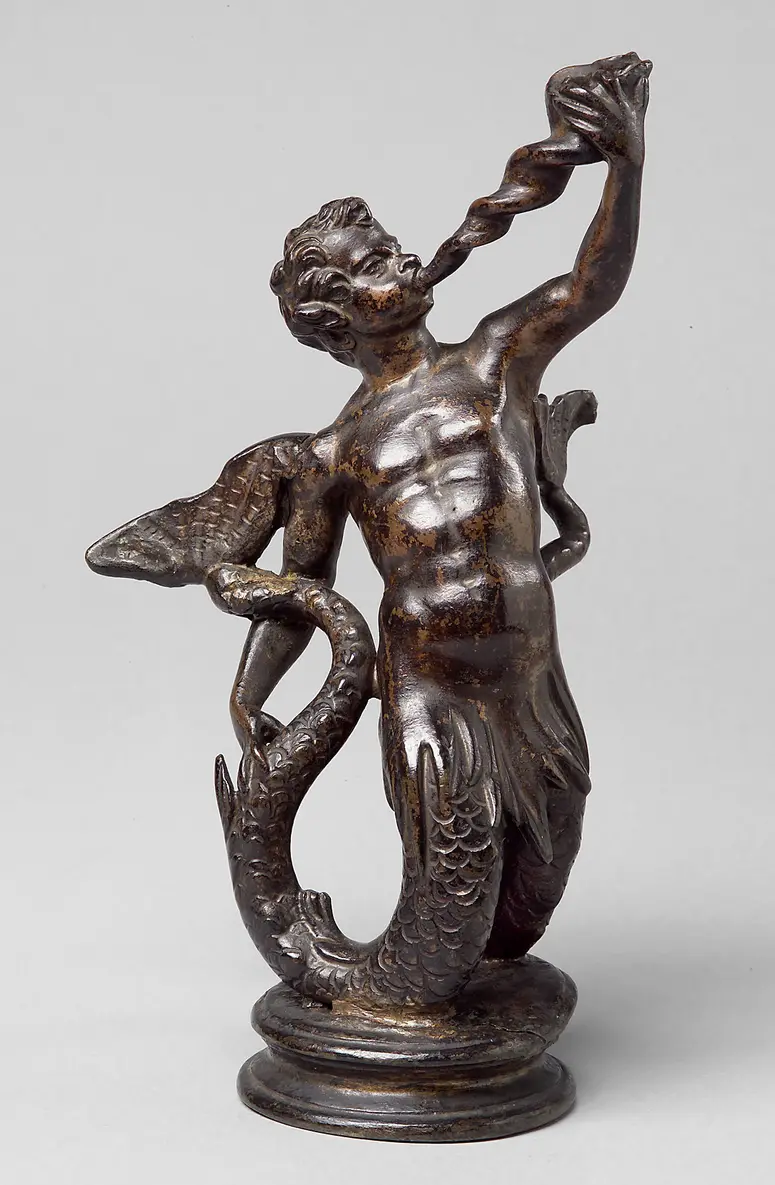
Muschelblasender Triton, Statuette, Bronze Nicolo Roccatagliata 1. Viertel 17. Jahrhundert