Cavalier in the Shop
1660 | Frans van Mieris d. Ä.
The key to understanding this genre painting is provided by the ambiguous and suggestive Latin inscription on the bunting, which can be translated in several ways, e.g., “he who will may buy” or “he who will may compare”. The inscription refers to both the cavalier’s action of running his fingers over the cloth and across the girl’s chin. The relationship of the old man at the fireplace to these goings-on remains unclear. The painting hanging in the background depicts the death of Abel and is probably a reference to the consequences of original sin.
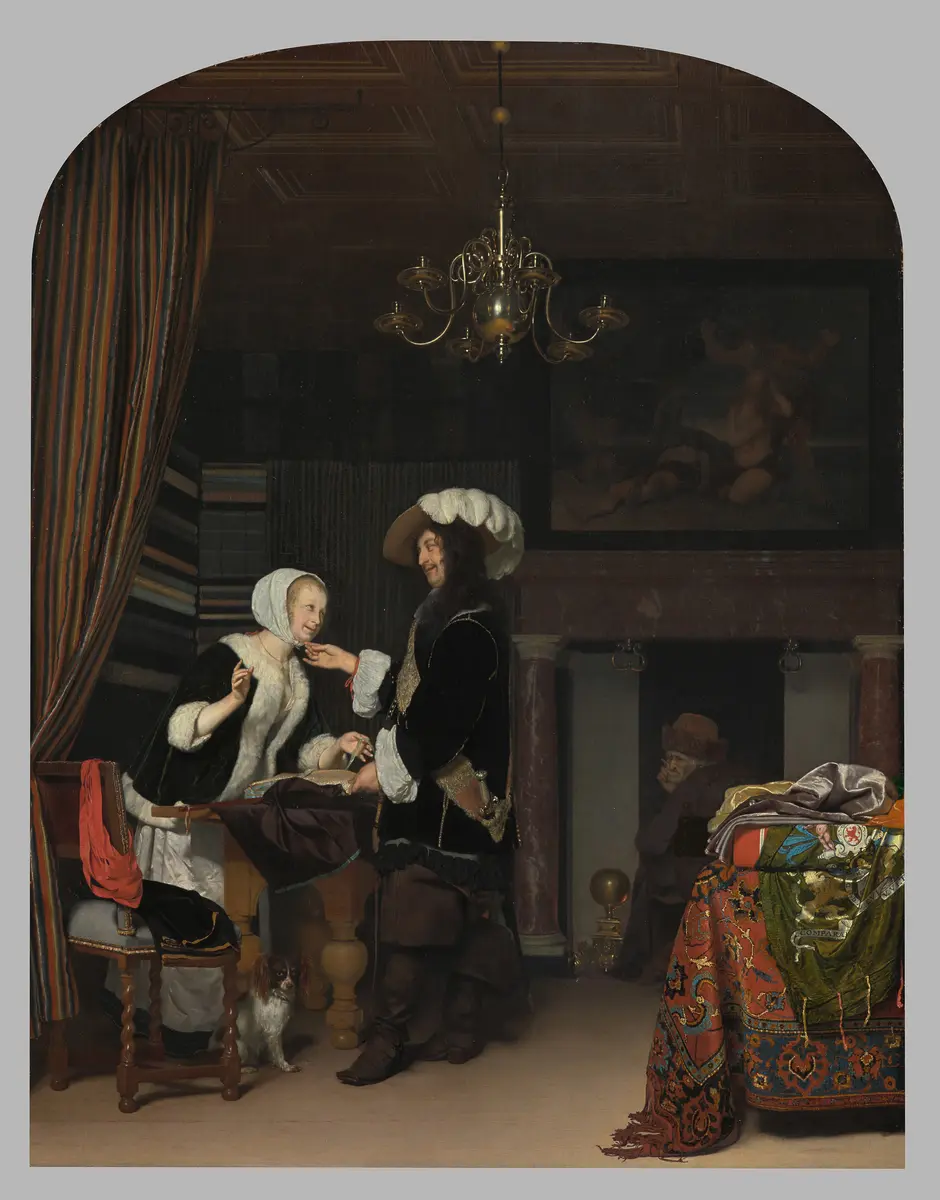
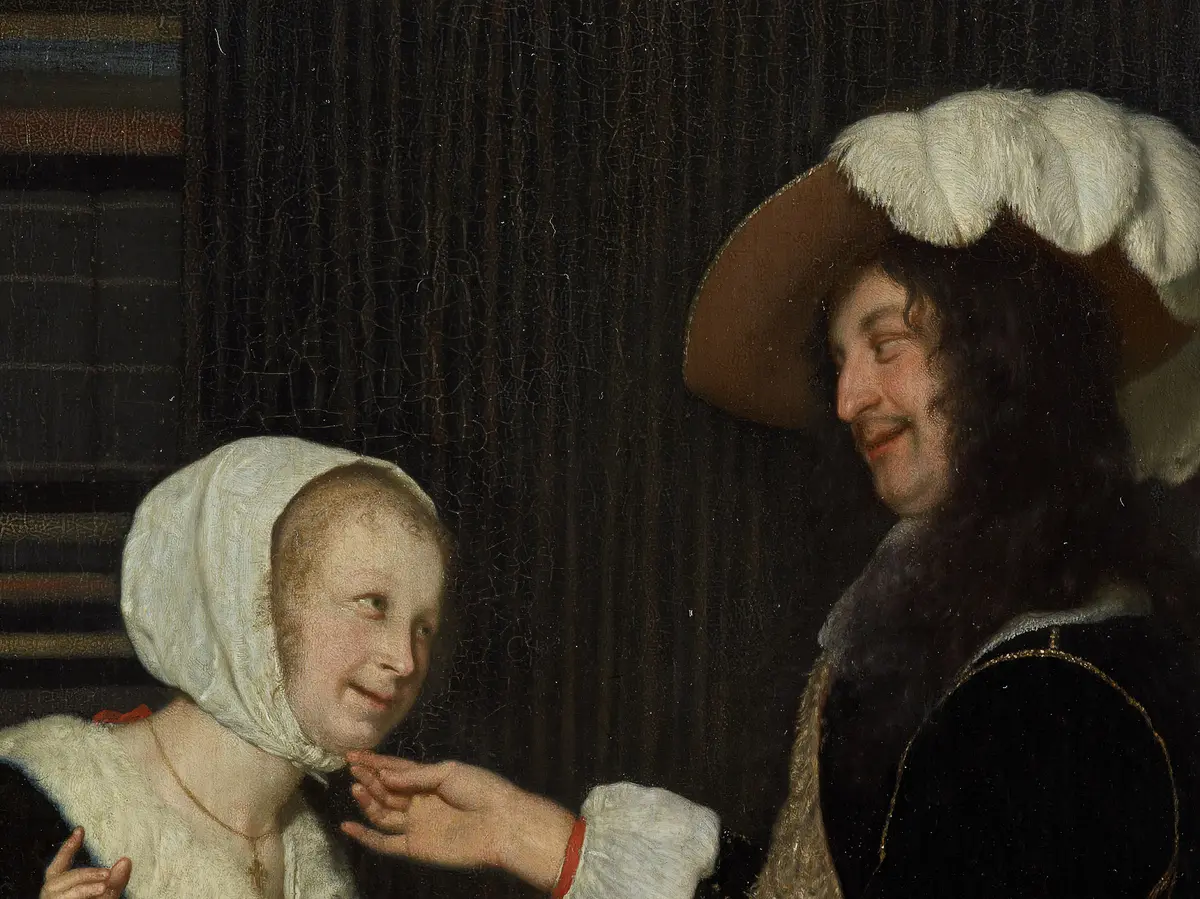
The key to understanding this genre painting is provided by the ambiguous and suggestive Latin inscription on the bunting, which can be translated in several ways, e.g., “he who will may buy” or “he who will may compare”. The inscription refers to both the cavalier’s action of running his fingers over the cloth and across the girl’s chin. The relationship of the old man at the fireplace to these goings-on remains unclear. The painting hanging in the background depicts the death of Abel and is probably a reference to the consequences of original sin.
Artist:
Frans van Mieris d. Ä. (1635 - 1681 Leiden) DNB
Time:
1660
Object Name
Painting
Culture
Dutch
Material/technology:
oak wood
Dimensions:
54,5 cm × 42,7 cm
Framed ( tortoiseshell): 78 cm × 68,4 cm × 8 cm
Signed
Inscribed on the left side of the chair back: F. van Mieris f. 1660
Inscribed
Inschrift auf dem Fahnentuch rechts: COMPARAT ... QVI/VVLT/(L)VGVNVM
Copyright
Kunsthistorisches Museum, Gemäldegalerie
Invs.
Gemäldegalerie, 586
Provenance
1660 acquired by Archduke Leopold Wilhelm for 1000 fl.