Schrank zur Aufbewahrung der Schlüssel zu den Särgen der Habsburger
1895 | Alexander Albert
For the funerals of members of the Imperial House the following ceremony was traditional: after the cortège arrived in the Capuchin Crypt, the velvet-lined wooden coffin was opened and the grand chamberlain (Oberstkämmerer) asked the guardian of the monastery if he recognised the deceased. Following an affirmative answer, the coffin was locked with two different keys, one of which remained with the Capuchins, while the other was given to the lord chamberlain (Obersthofmeister) and deposited in the Treasury. The keys to the coffins of the Habsburgs buried at Seckau, Bozen (Bolzano, Italy), Gmünd, Gran (Esztergom, Hungary), Linz, Mantua and Neuberg an der Mürz were also placed in the Treasury. These keys, which lock the coffins of 139 Habsburgs buried in the Capuchin Crypt and other burial places, are contained in numerous small compartments of this neo-Baroque wooden cabinet with four doors. While the oldest keys date back to the 17th century, most of them are of a more recent date. The earliest Habsburg for whose coffin a key exists is Duke Otto the Merry (1301-1339). The arrangement of the keys follows a strict ceremonial: the middle section of the cabinet is reserved for emperors and their closest relatives, while the keys to the coffins of all other members of the House of Habsburg are kept in the side sections. An ivory crucifix (Inv. No. SK_WS_XIV_33) is installed in the recess of the middle door. It was probably created around 1695 by Gabriel Grupello at the Düsseldorf court, entered the Treasury in the 19th century, and was reused for this cabinet. Originally intended for private devotional use, the type of the living and thus suffering Christ directly addresses the sensitivity of the believer. This intensity of this representation is characteristic of religious artworks of the Baroque period.
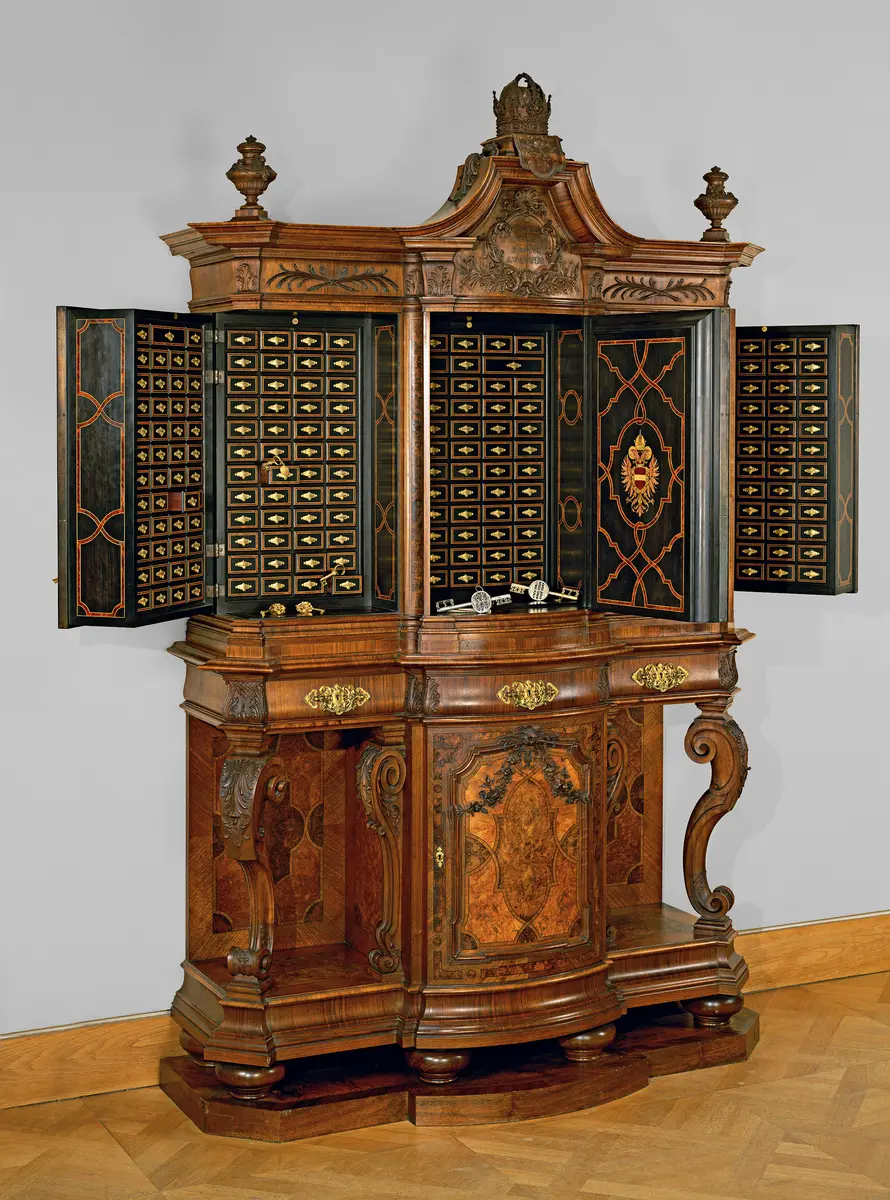
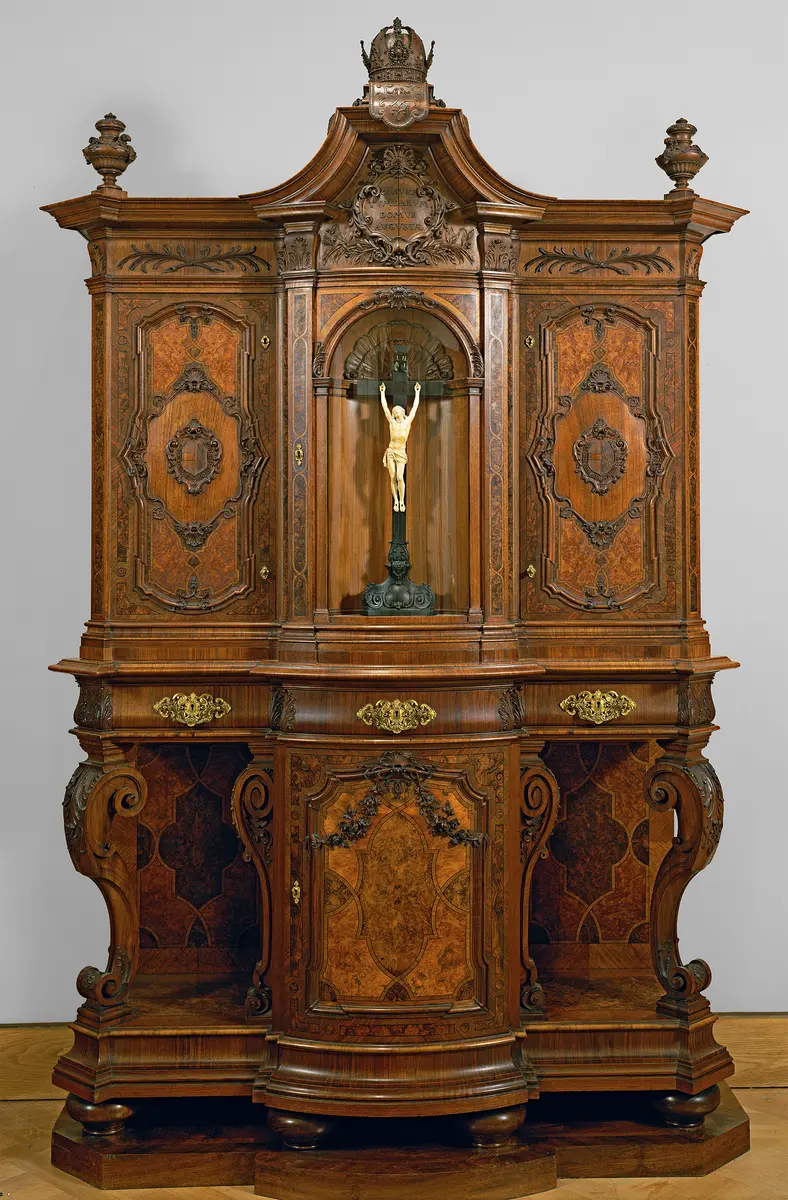
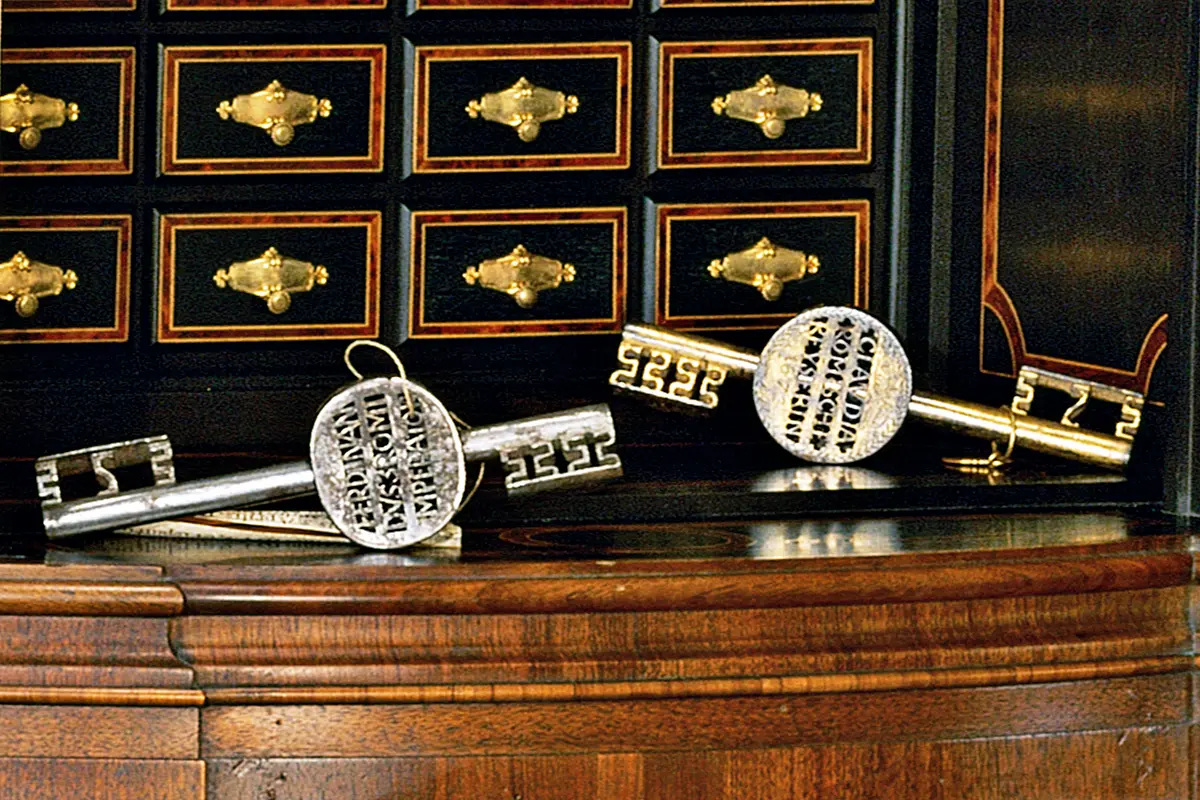
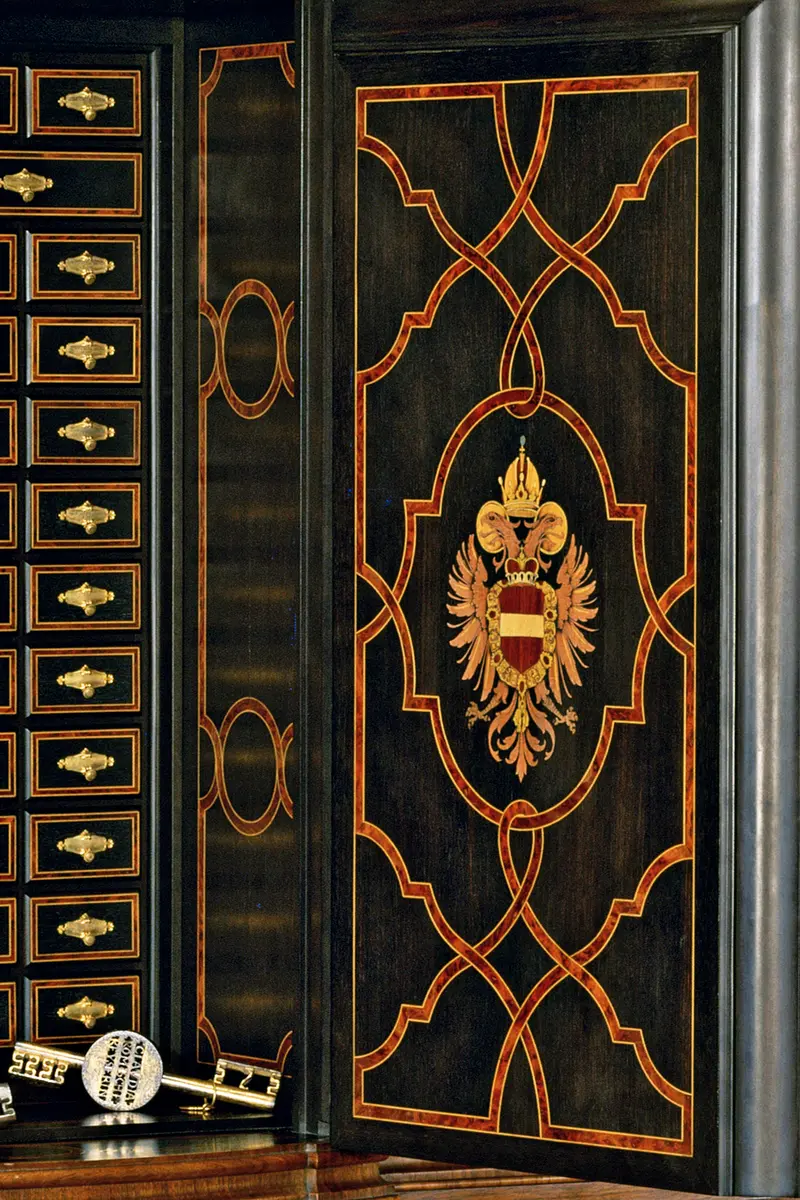
For the funerals of members of the Imperial House the following ceremony was traditional: after the cortège arrived in the Capuchin Crypt, the velvet-lined wooden coffin was opened and the grand chamberlain (Oberstkämmerer) asked the guardian of the monastery if he recognised the deceased. Following an affirmative answer, the coffin was locked with two different keys, one of which remained with the Capuchins, while the other was given to the lord chamberlain (Obersthofmeister) and deposited in the Treasury. The keys to the coffins of the Habsburgs buried at Seckau, Bozen (Bolzano, Italy), Gmünd, Gran (Esztergom, Hungary), Linz, Mantua and Neuberg an der Mürz were also placed in the Treasury. These keys, which lock the coffins of 139 Habsburgs buried in the Capuchin Crypt and other burial places, are contained in numerous small compartments of this neo-Baroque wooden cabinet with four doors. While the oldest keys date back to the 17th century, most of them are of a more recent date. The earliest Habsburg for whose coffin a key exists is Duke Otto the Merry (1301-1339). The arrangement of the keys follows a strict ceremonial: the middle section of the cabinet is reserved for emperors and their closest relatives, while the keys to the coffins of all other members of the House of Habsburg are kept in the side sections. An ivory crucifix (Inv. No. SK_WS_XIV_33) is installed in the recess of the middle door. It was probably created around 1695 by Gabriel Grupello at the Düsseldorf court, entered the Treasury in the 19th century, and was reused for this cabinet. Originally intended for private devotional use, the type of the living and thus suffering Christ directly addresses the sensitivity of the believer. This intensity of this representation is characteristic of religious artworks of the Baroque period.
Artist:
Alexander Albert , (Hoftischler) DNB
Time:
1895
Object Name
Schrank
Culture
Wien
Material/technology:
Nuß und andere Hölzer
Dimensions:
H. 243 cm, B. 149 cm, T. 64 cm
Inscribed
"CLAVES TVMBARVM DOMVS AVGVSTAE"
Copyright
Kunsthistorisches Museum, Weltliche Schatzkammer
Invs.
Schatzkammer, WS XVI A 24
Browse more
Similar items you might be interested in
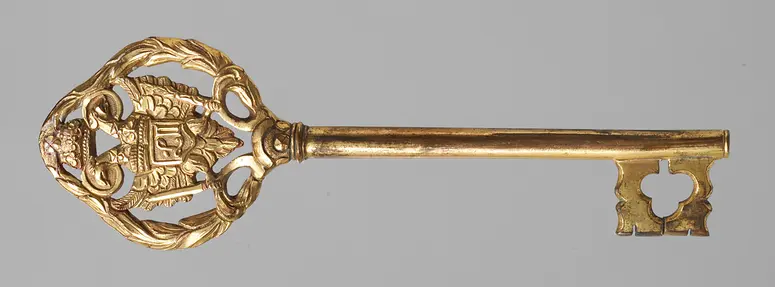
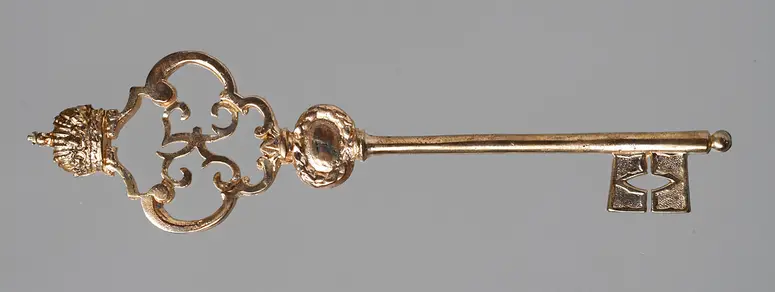
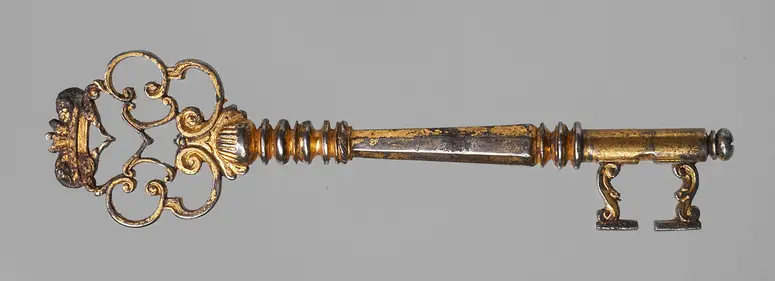
Kämmererschlüssel der Erzherzogin Maria Theresia 1740/41
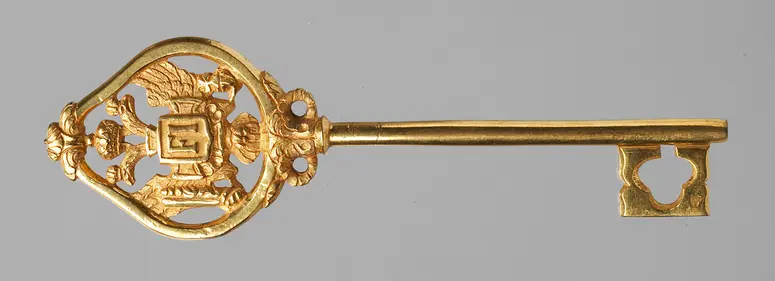
Kämmererschlüssel Kaiser Ferdinands I. von Österreich 1835/48
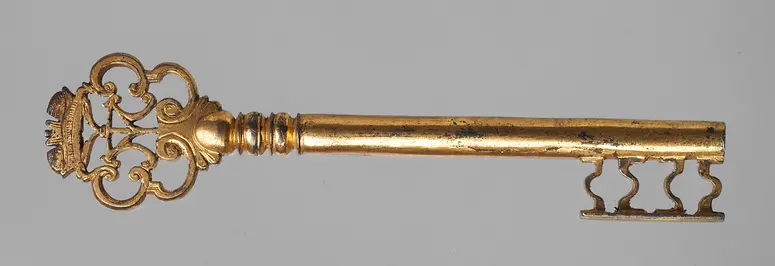
Kämmererschlüssel der Kaiserin Maria Theresia um 1745
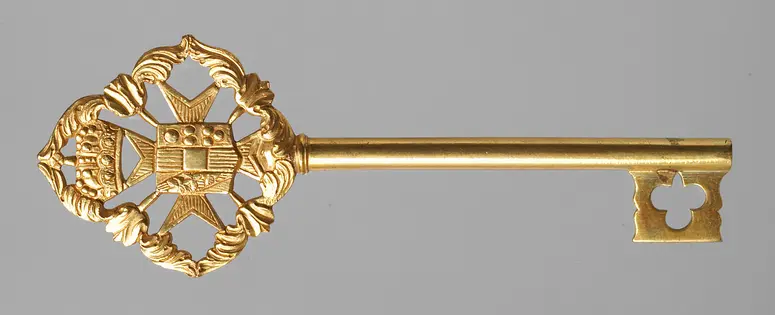
Kämmererschlüssel des Großherzogs Ferdinand III. von Toskana Anfang 19. Jahrhundert
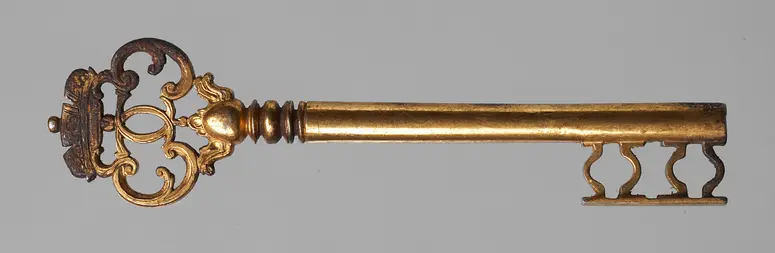

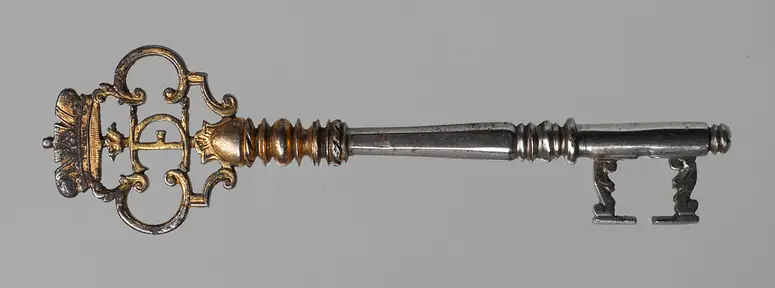
Kämmererschlüssel der Kaiserin Elisabeth Christine nach 1714
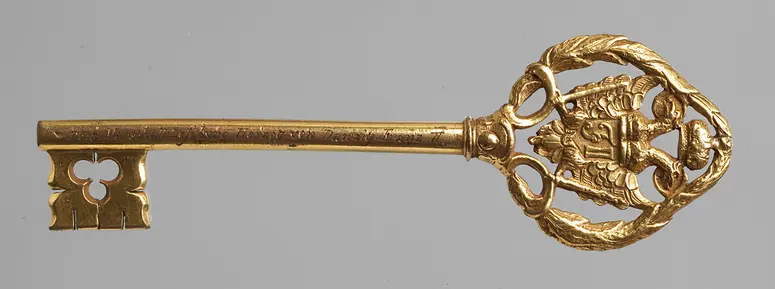
Kämmererschlüssel Kaiser Franz II. (I.) 1792/1806
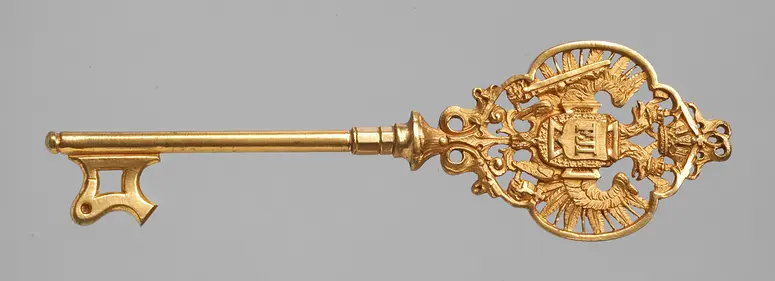
Kämmererschlüssel Kaiser Franz Josephs I. nach 1848
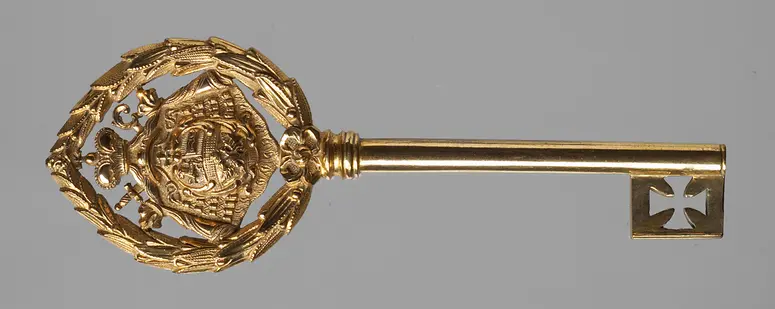
Kämmererschlüssel des Salzburger Fürsterzbischofs Hieronymus Graf Colloredo 1772/1803
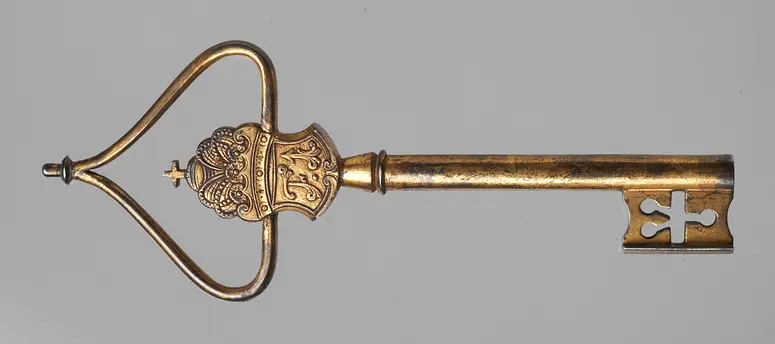
Kämmererschlüssel Kaiser Franz´I. und Maria Theresias 1745/65
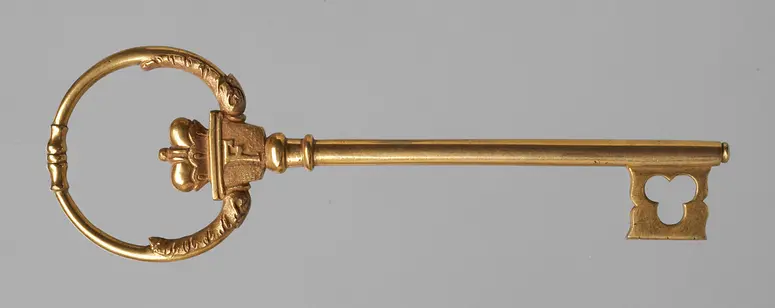
Kämmererschlüssel des Erzherzogs und späteren Kaisers Franz II. (?) 4. Viertel 18. Jahrhundert
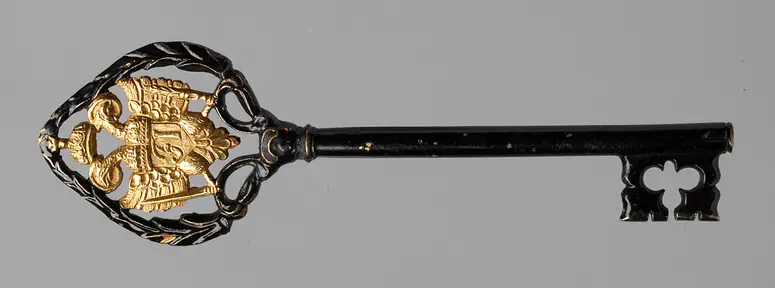
Kämmererschlüssel Kaiser Franz I. von Österreich 1806/1835
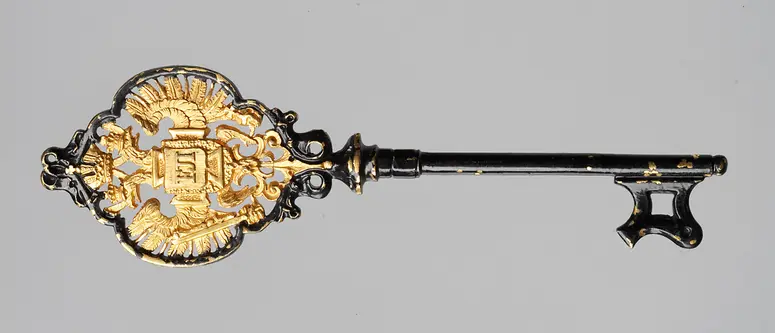
Kämmererschlüssel Kaiser Franz Josephs I. nach 1848
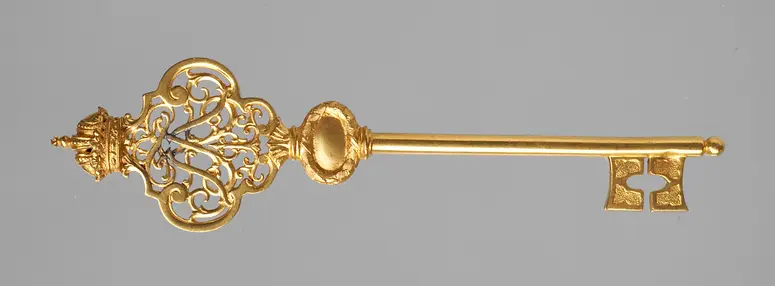
Kämmererschlüssel Kaiser Franz Josephs I. Fa. Mayerhofer & Klinkosch 2. Hälfte 19. Jahrhundert
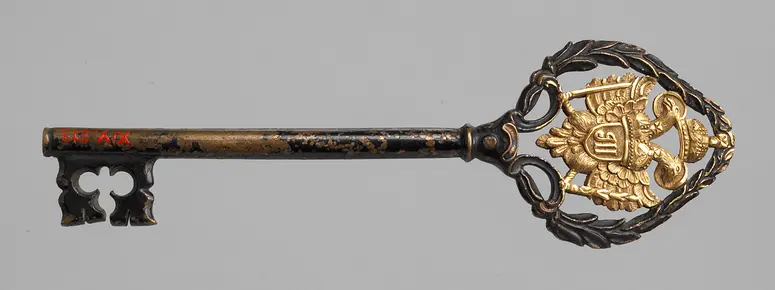
Kämmererschlüssel der Kaiserin Maria Theresia und des Kaisers Joseph II. 1765/80
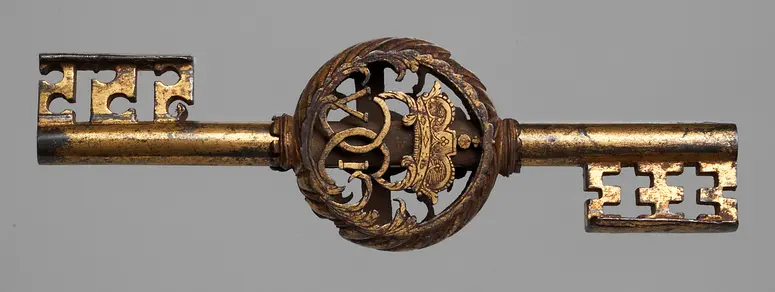
Kämmererschlüssel Kaiser Karls VI. Karl VI. (1711-1740), Kaiser 1711/14
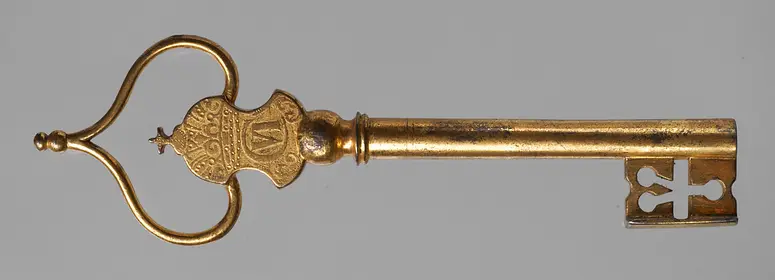
Kämmererschlüssel Kaiser Karls VI. Karl VI. (1711-1740), Kaiser 1711/14