Der Reichsapfel
um 1200
The globe consists of gold foil over a resinous mass to give the chased hollow object additional strength. The four intersecting bands and upper pole of the globe as well as the cross with its fleur-de-lys-shaped extremities are decorated with jewels and filigree work. At the centre of one side of the cross is an intaglio from late antiquity; otherwise the two sides are largely the same. The original rows of pearls on the equatorial band of the globe has been lost. In the ancient world, the form of the sphere had a triple meaning: it was an image of the cosmos and the earth and also a symbol of the concept of universal power. With the addition of the cross, the symbol of power was reinterpreted in the Christian sense. The Imperial Orb with the cross rising from it stands for the rule of Christ over the four parts of the world that were known at that time. Thus the Imperial Orb - like the Imperial Crown and the Imperial Cross - expresses the central idea of Christ as the ruler of the world and of the emperor as his representative. The Carolingians were already using such imperial insignia created on the model of the early Byzantines; from the 11th century imperial orbs were made of non-precious materials and used as burial objects. Into the 18th century the imperial regalia included three imperial orbs, but two of them were lost while being taken away to hide them from revolutionary troops in 1796. For stylistic reasons, the present Imperial Orb can be dated to the end of the 12th century, and Cologne is the most likely place of origin. It remains unclear whether these insignia were created for a Hohenstaufen ruler - for example, Henry VI (coronation in 1191) or Philip of Swabia (coronation in Mainz in 1198) - or for a rival of the latter, the Welf Otto IV (coronation in Aachen in 1198).
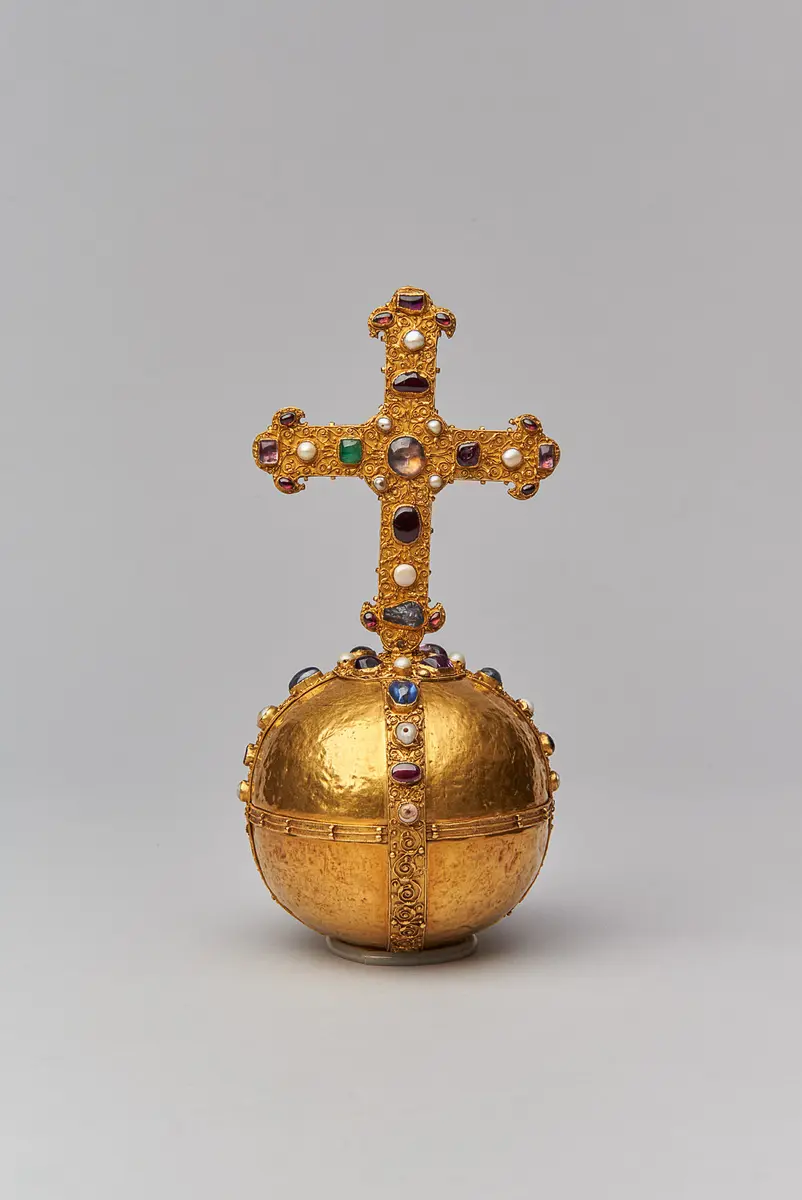
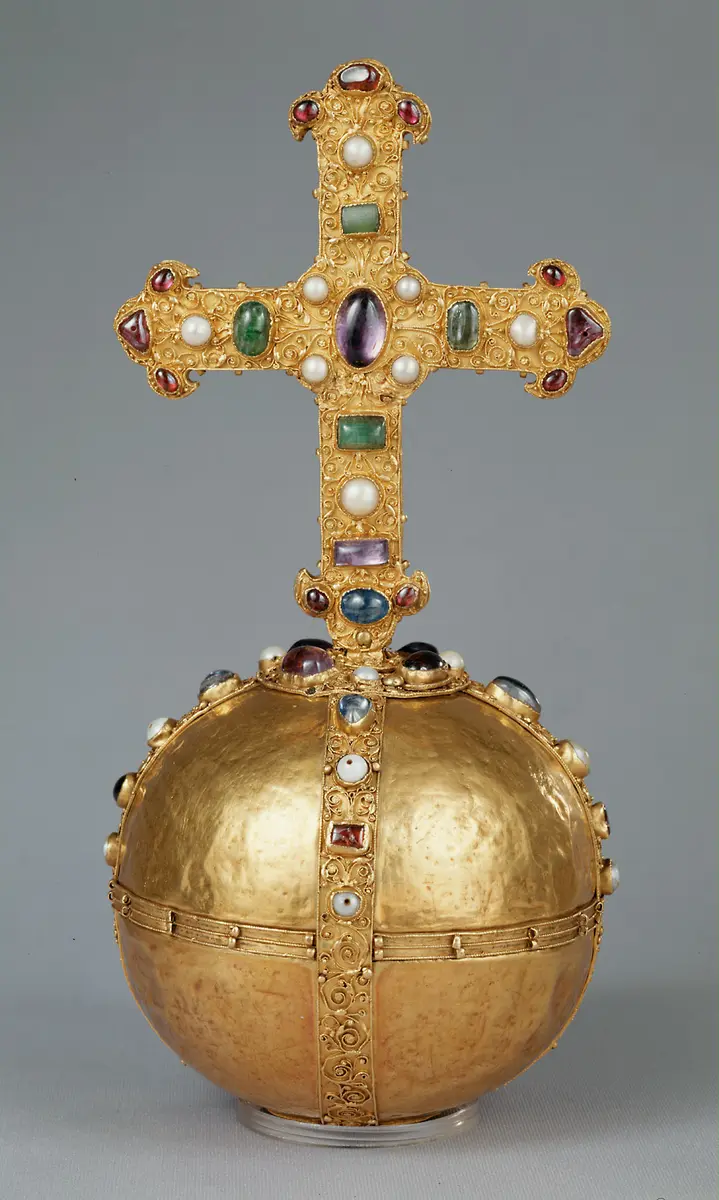
The globe consists of gold foil over a resinous mass to give the chased hollow object additional strength. The four intersecting bands and upper pole of the globe as well as the cross with its fleur-de-lys-shaped extremities are decorated with jewels and filigree work. At the centre of one side of the cross is an intaglio from late antiquity; otherwise the two sides are largely the same. The original rows of pearls on the equatorial band of the globe has been lost. In the ancient world, the form of the sphere had a triple meaning: it was an image of the cosmos and the earth and also a symbol of the concept of universal power. With the addition of the cross, the symbol of power was reinterpreted in the Christian sense. The Imperial Orb with the cross rising from it stands for the rule of Christ over the four parts of the world that were known at that time. Thus the Imperial Orb - like the Imperial Crown and the Imperial Cross - expresses the central idea of Christ as the ruler of the world and of the emperor as his representative. The Carolingians were already using such imperial insignia created on the model of the early Byzantines; from the 11th century imperial orbs were made of non-precious materials and used as burial objects. Into the 18th century the imperial regalia included three imperial orbs, but two of them were lost while being taken away to hide them from revolutionary troops in 1796. For stylistic reasons, the present Imperial Orb can be dated to the end of the 12th century, and Cologne is the most likely place of origin. It remains unclear whether these insignia were created for a Hohenstaufen ruler - for example, Henry VI (coronation in 1191) or Philip of Swabia (coronation in Mainz in 1198) - or for a rival of the latter, the Welf Otto IV (coronation in Aachen in 1198).
Time:
um 1200
Object Name
Insigne; Reichsapfel
Culture
Köln (?)
Material/technology:
Gold, Edelsteine, Perlen
Dimensions:
H. 21 cm, Dm. 9,5 cm, Gewicht 522 g
Copyright
Kunsthistorisches Museum, Weltliche Schatzkammer
Invs.
Schatzkammer, WS XIII 2