Adlerdalmatika
1330/40, um 1300
As part of the coronation regalia, the floor-length Eagle Dalmatic with slit sides (a dalmatic is usually an overgarment worn by a deacon or prelate) was mentioned for the first time when it was documented as having been transferred in 1350. It is questionable whether or not it was ever worn for a coronation. Probably it was made for Louis of Bavaria (reigned 1314-1347) at the same time as the Stola (Inv. No. SK_WS_XIII_8). A drawing by Albrecht Dürer in 1510 depicts an idealised Charlemagne wearing the Eagle Dalmatic with the Stola and Imperial Mantle. The Chinese silk of the principal fabric, a damask twill, gets its red colour from having been dyed with orseille (also orchil or archil), a dye obtained from lichen. The pattern is the typically Chinese ring of clouds alternating with double-framed lozenges. The entire gown is covered with 68 appliqué medallions in silk embroidery depicting single-headed eagles on a gold ground; they are similar to those on the Stola. The eyes of the eagles, some of which are still extant, are made of black strass. The neckline, armholes, cuffs, hem and the lateral slits are decorated with gold embroidery on a linen backing. Executed in split stitch and couching, the embroidery has alternating designs of acanthus, oak and vine leaves with medallions. In the six medallions on the neck are portraits of crowned rulers wearing stoles decorated with crosses. The remaining medallions depict in three-quarter figures kings and emperors (identifiable because of the crown with arch) with crown, sceptre and imperial orb. It is possible that they represent a dynastic series, but no satisfactory explanation has yet been offered.
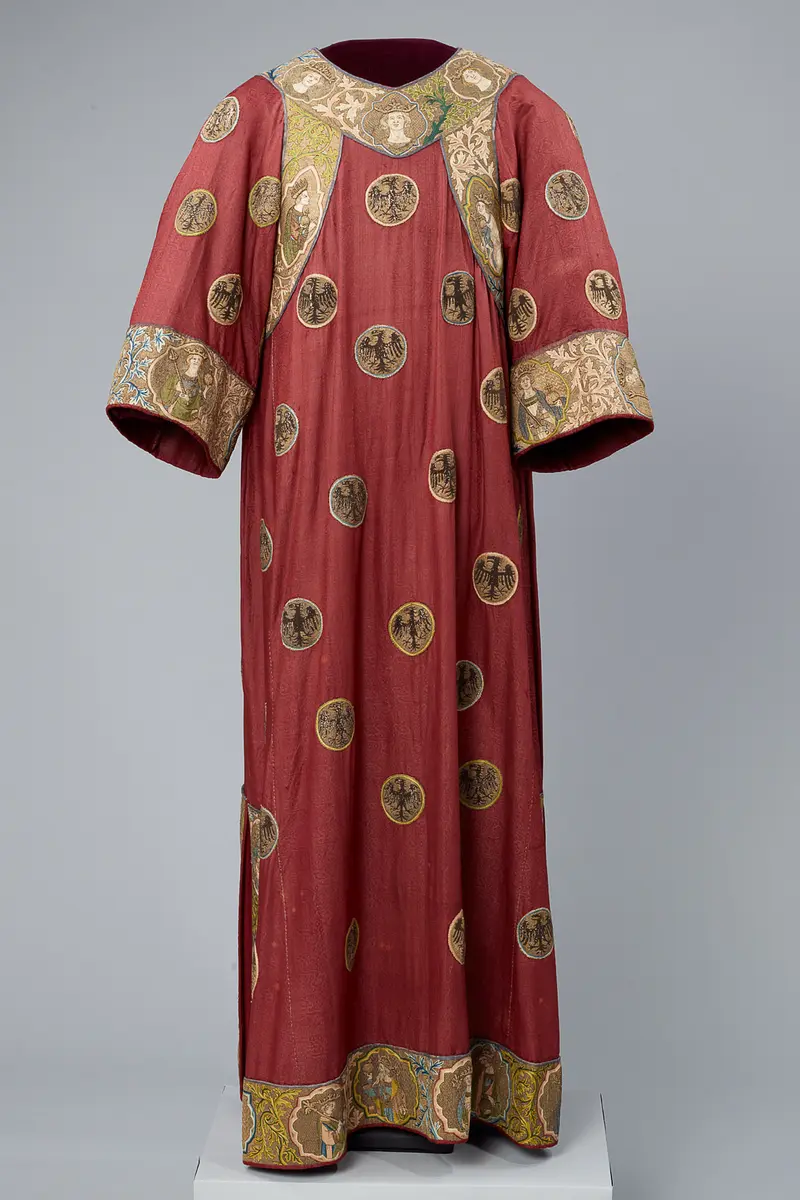
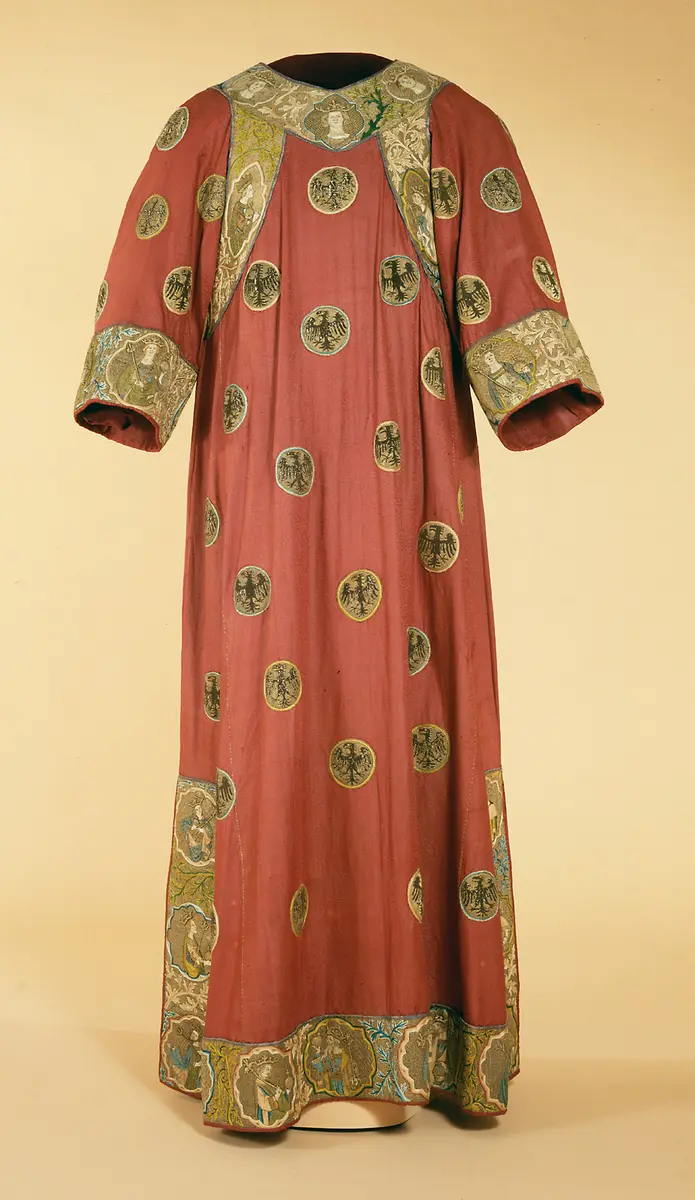
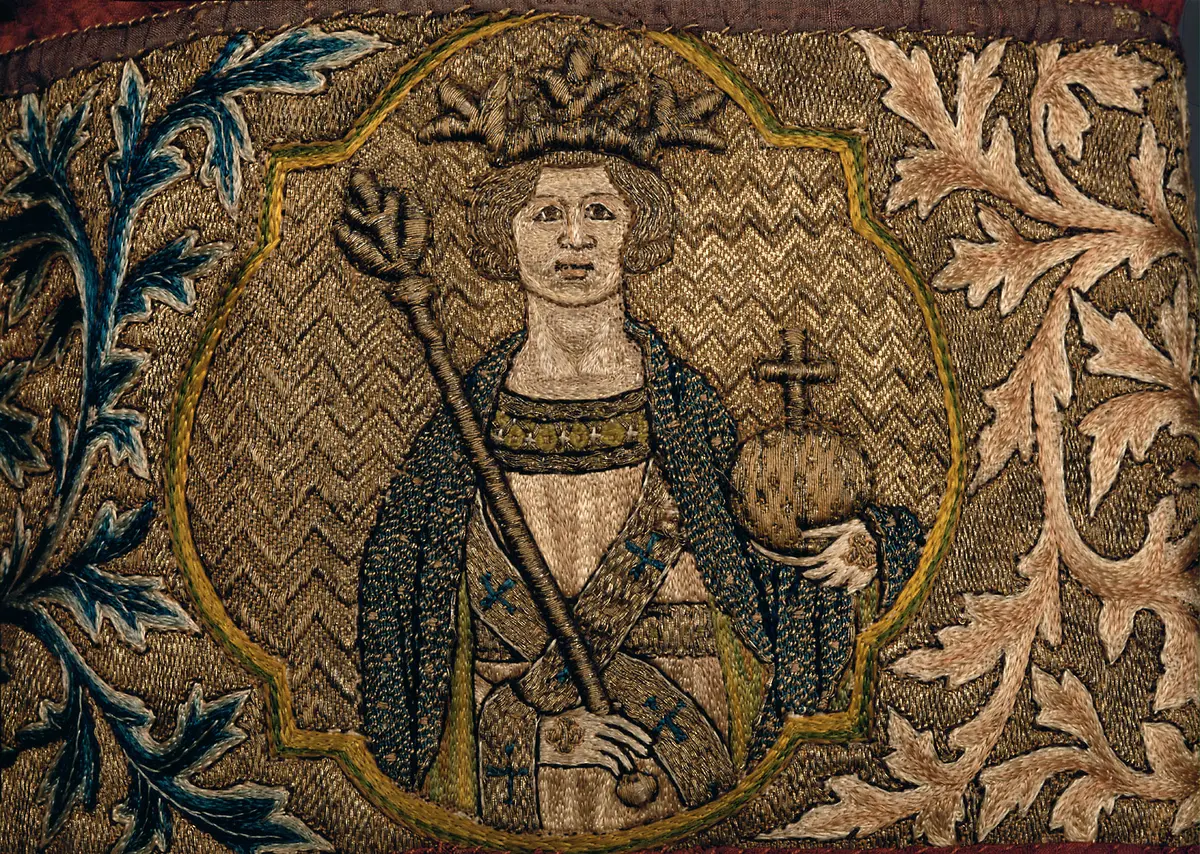
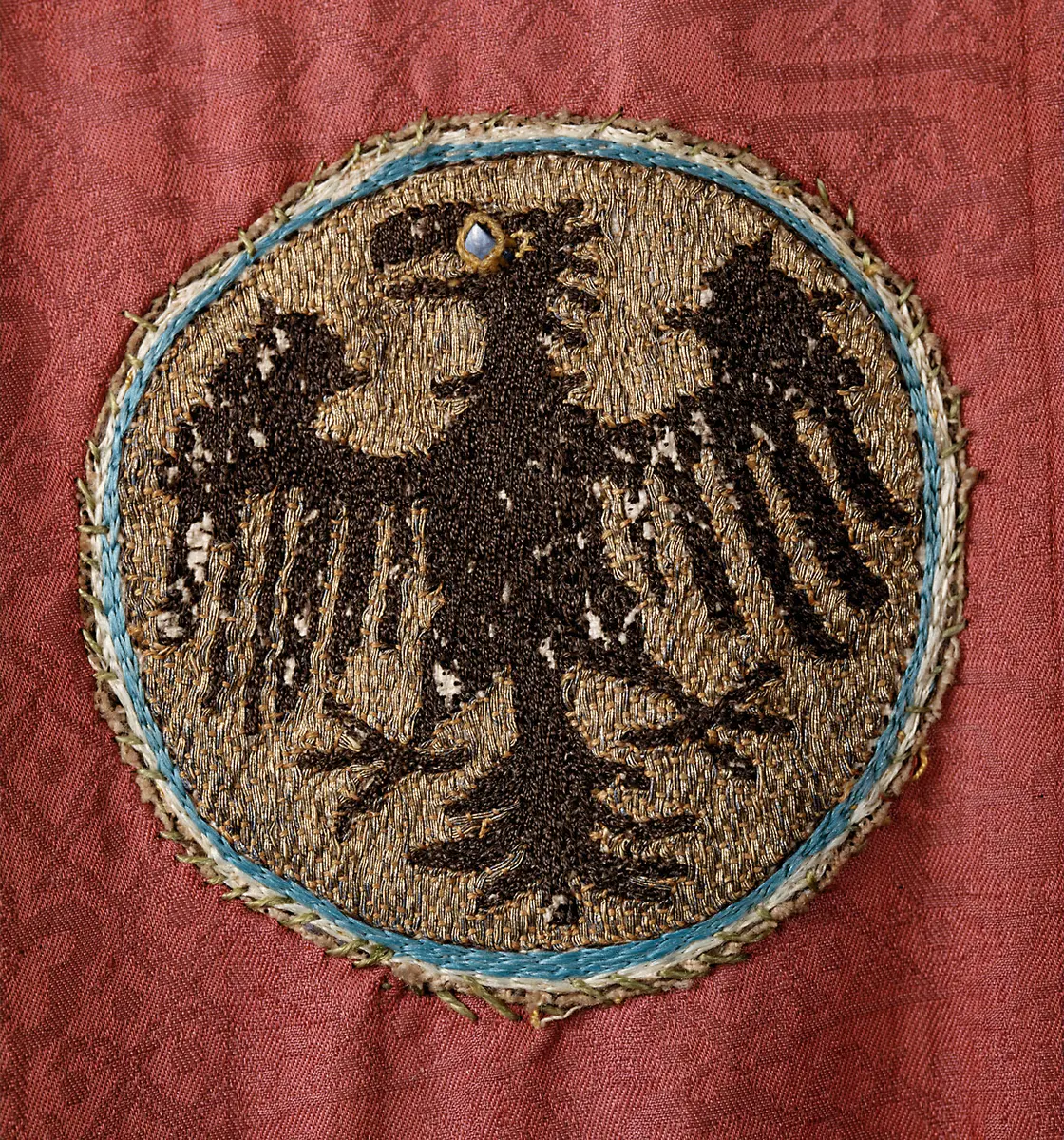
As part of the coronation regalia, the floor-length Eagle Dalmatic with slit sides (a dalmatic is usually an overgarment worn by a deacon or prelate) was mentioned for the first time when it was documented as having been transferred in 1350. It is questionable whether or not it was ever worn for a coronation. Probably it was made for Louis of Bavaria (reigned 1314-1347) at the same time as the Stola (Inv. No. SK_WS_XIII_8). A drawing by Albrecht Dürer in 1510 depicts an idealised Charlemagne wearing the Eagle Dalmatic with the Stola and Imperial Mantle. The Chinese silk of the principal fabric, a damask twill, gets its red colour from having been dyed with orseille (also orchil or archil), a dye obtained from lichen. The pattern is the typically Chinese ring of clouds alternating with double-framed lozenges. The entire gown is covered with 68 appliqué medallions in silk embroidery depicting single-headed eagles on a gold ground; they are similar to those on the Stola. The eyes of the eagles, some of which are still extant, are made of black strass. The neckline, armholes, cuffs, hem and the lateral slits are decorated with gold embroidery on a linen backing. Executed in split stitch and couching, the embroidery has alternating designs of acanthus, oak and vine leaves with medallions. In the six medallions on the neck are portraits of crowned rulers wearing stoles decorated with crosses. The remaining medallions depict in three-quarter figures kings and emperors (identifiable because of the crown with arch) with crown, sceptre and imperial orb. It is possible that they represent a dynastic series, but no satisfactory explanation has yet been offered.
Time:
1330/40, um 1300
Object Name
Textil; liturgisches Gewand; Krönungsornat
Culture
Süddeutsch; Chinesisch (Stoff)
Material/technology:
Textil; Roter Seidenkörperdamast, Stickerei in Seide und Gold, Glassteinchen
Dimensions:
L. 165 bzw. 160 cm, B. 138 cm
Copyright
Kunsthistorisches Museum, Weltliche Schatzkammer
Invs.
Schatzkammer, WS XIII 15