Lucretia
around 1520/25 | Joos van Cleve
According to a Roman legend, Lucretia, the wife of Lucius Tarquinius Collatinus, committed suicide after being raped by Superbus, the son of the Roman king Tarquinius. The subsequent rebellion drove the family of Tarquin kings from Rome. In the Christian interpretation of the theme, Lucretia is considered a virtuous heroine, despite her suicide. Beginning in the early 16th century, Lucretia was depicted with great frequency in Netherlandish painting in half-length portraits. They were perhaps intended as an allegory of courage.
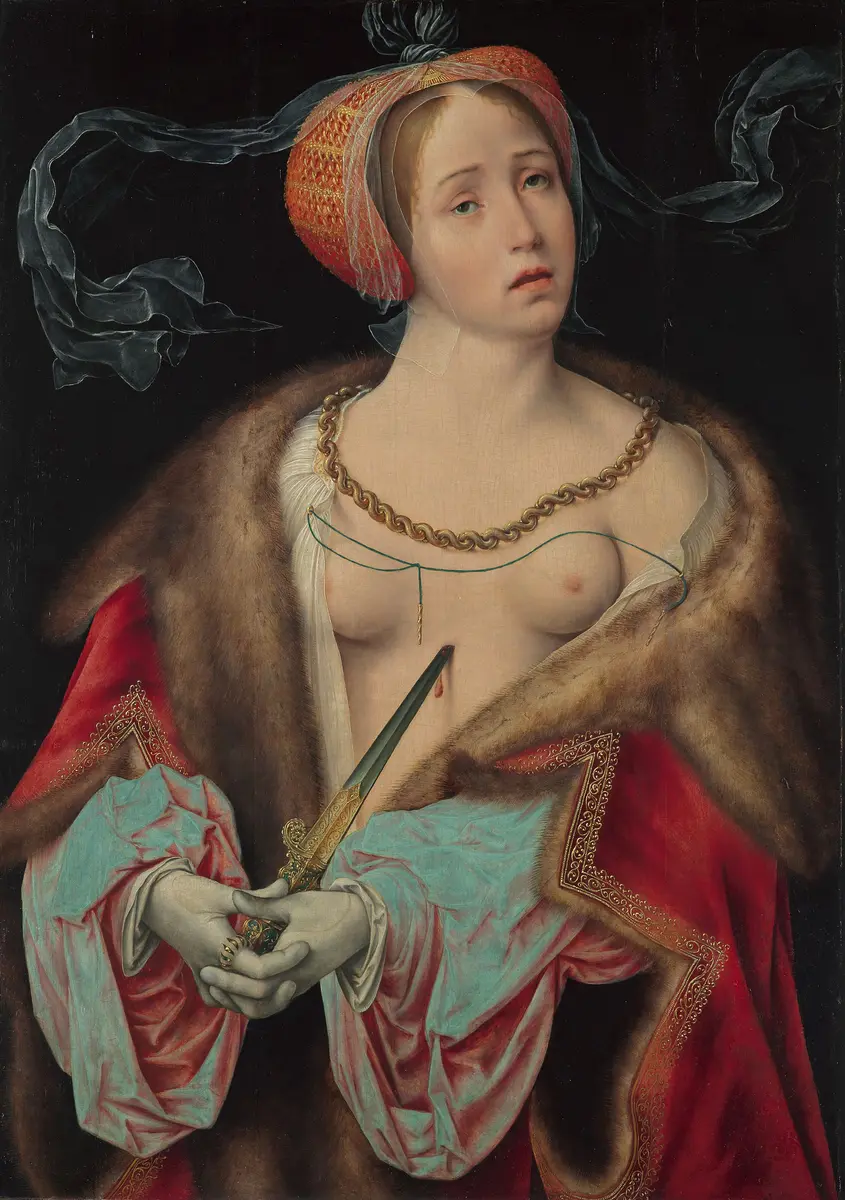
According to a Roman legend, Lucretia, the wife of Lucius Tarquinius Collatinus, committed suicide after being raped by Superbus, the son of the Roman king Tarquinius. The subsequent rebellion drove the family of Tarquin kings from Rome. In the Christian interpretation of the theme, Lucretia is considered a virtuous heroine, despite her suicide. Beginning in the early 16th century, Lucretia was depicted with great frequency in Netherlandish painting in half-length portraits. They were perhaps intended as an allegory of courage.
Artist:
Joos van Cleve (um 1485 Kleve ? - 1540 Antwerpen) DNB
Time:
around 1520/25
Object Name
Painting
Culture
Netherlandish
Material/technology:
oak wood
Dimensions:
75,7 cm × 53,9 cm × 3,2 cm
Framed: 90,7 cm × 68,2 cm × 5 cm
Copyright
Kunsthistorisches Museum, Gemäldegalerie
Invs.
Gemäldegalerie, 833
Provenance
Coll. Leopold Wilhelm